
Best Reading Chairs for a Cozy Reading Nook
By Mabrouk Mhamdi · Curator at Apex Illume
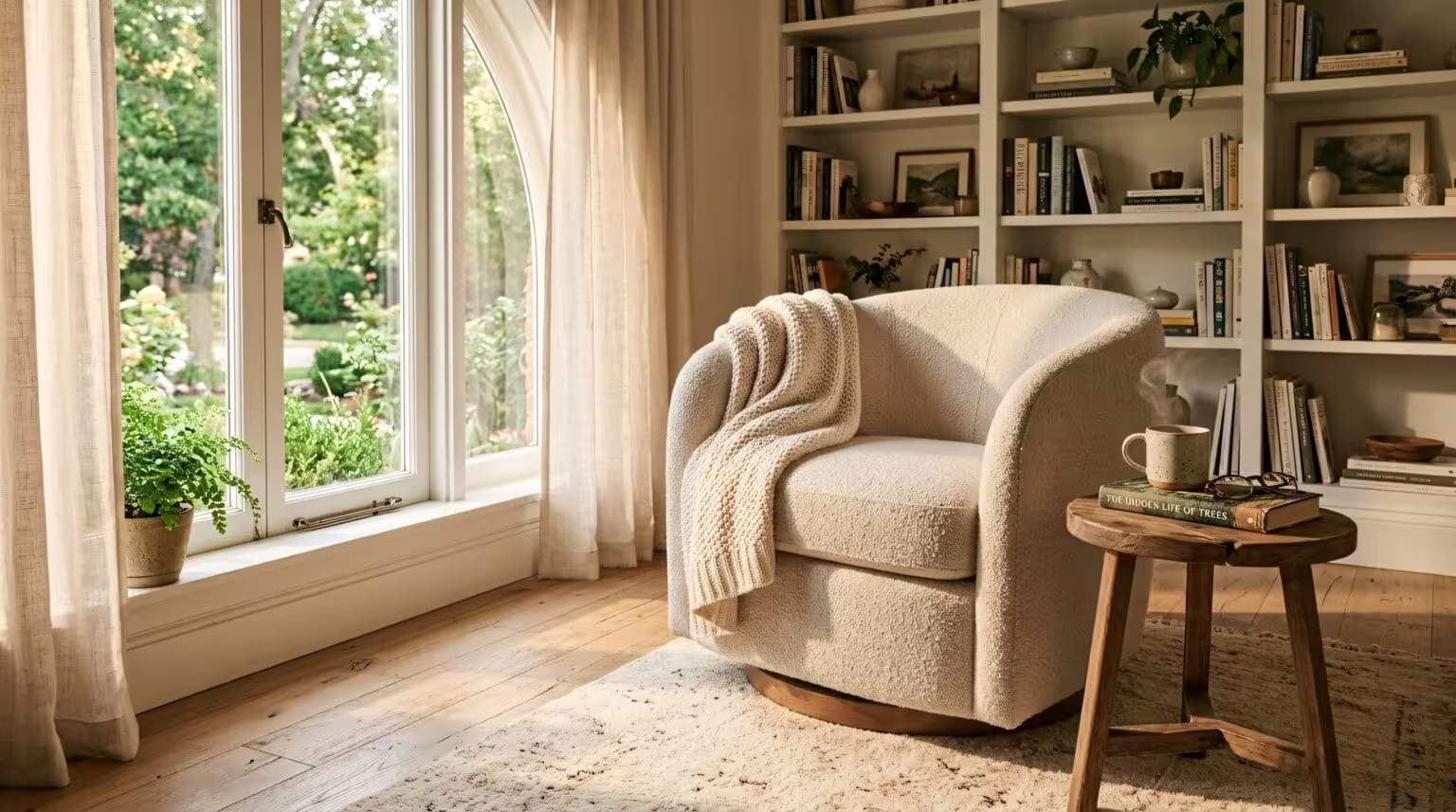
Rain traces the window in slow, unhurried lines. The chair sits angled just so — not facing the room, but turned slightly away from it, toward the light. A book rests open. An hour passes, then another, and the only sound is the occasional turn of a page.
This is what a reading chair is actually for. Not seating in the conventional sense, but an invitation — a small, standing permission to disappear for a while. Choosing one well means understanding exactly what makes that disappearance possible.
“Apex Illume is reader-supported. When you purchase through links on our site, we may earn an affiliate commission at no extra cost to you.”
How We Chose Reading Chairs (and Nook Setups) That Actually Get Used
A reading chair isn’t judged by a quick sit—it’s judged by whether time disappears in it. For this guide, I prioritized comfort geometry (seat depth, back angle, arm height), livability (durable upholstery and sensible dimensions), and the reality that a chair is only as good as the light beside it. The featured chairs lean toward shapes that invite stillness—rounded barrels, leggy lounge silhouettes, and swivels that follow the day’s light without asking you to move the furniture.
What Makes a Reading Chair Comfortable for Hours
Comfort for an hour and comfort for an afternoon are two different measurements. The best reading chairs are built for the latter.
Seat Depth That Supports Long Sitting
A seat deep enough to allow a slightly reclined, curled-up posture is essential — somewhere between 20 and 23 inches from front edge to backrest. Too shallow, and the legs have nowhere restful to go. Too deep, and the back loses its support entirely.
Back Angle for Neck and Shoulder Ease
A back that leans a few degrees past vertical does more for hours-long comfort than any cushion can. This slight recline lets the neck and shoulders release rather than hold tension against an upright frame.
Arm Height for Resting, Not Just Reaching
Arms should sit low enough to rest a forearm naturally, not so high that shoulders creep upward to reach them. A reading chair’s arms exist to hold a book, a cup of tea, or simply the weight of a relaxed hand — not to prop up posture.
Reading Chair Styles for Every Kind of Nook
The right silhouette depends less on trend and more on how a person actually likes to read.
Swivel Barrel Chairs for Light and Flexibility
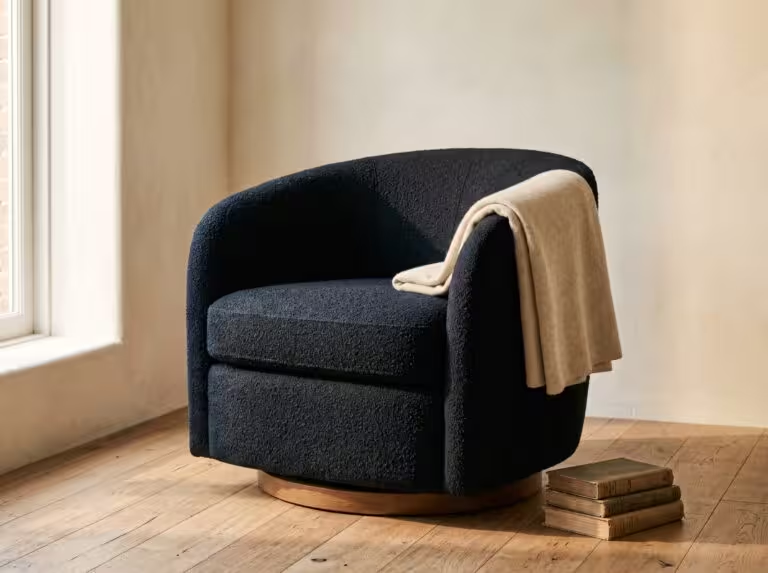
A swivel barrel chair offers something rare in reading furniture: the ability to turn toward the light in the morning and toward the room by evening, all from the same spot. The Bruford Swivel Barrel Chair, upholstered in handwoven bouclé with a solid-wood base, captures this flexibility beautifully — a rounded, enveloping shape at 35 inches wide that swivels with ease. Available in Cream or Midnight and priced at $1,109 through Perigold, it looks sculptural from every angle, which matters in a chair meant to be looked at as often as it’s read in.
Pros
- Swivel function that makes daylight feel usable from morning to evening.
- Bouclé texture that reads immediately inviting.
- Sculptural from every angle—important in a chair you’ll see constantly.
Cons
- Bouclé is best in a calmer corner; it doesn’t love constant abrasion.
- Swivels need floor space so they don’t feel cramped in rotation.
Who it’s for
- Readers who chase the light throughout the day.
- Nooks that need one chair to look finished without extra styling.
Who shouldn’t buy
- If the chair will take daily punishment from pets/claws or constant rough use.
- If the nook is extremely tight and swivel clearance isn’t realistic.
Placement guidance
- Angle it slightly beside the window rather than facing the glass directly—bright without glare.
- Pair with a small side table within easy reach; the chair should never require you to stand up for basics.
Bruford Swivel Barrel Chair
by Home Trends & Design
Swivel barrel chair upholstered in handwoven bouclé (available in Cream or Midnight), with a solid-wood base
Price at time of publishing· Subject to change
US only
Wingbacks for Enclosed, Cocooning Comfort
A wingback’s raised sides create a quiet enclosure, blocking peripheral distraction and drafts alike. It suits readers who want their nook to feel fully separate from the rest of the room.
Chaises for Full-Recline Reading
For readers who prefer legs fully extended, a chaise delivers a different kind of comfort altogether — closer to lounging than sitting, ideal for marathon reading sessions.
Chair-and-a-Half for Sprawling Out
A chair-and-a-half offers the generous width of a small sofa with the singular focus of a chair — room enough to tuck legs sideways or invite a pet to share the space without crowding.
Chair-and-Ottoman vs. Recliner — Which Setup Wins
Both setups solve the same problem — elevated, supported legs — but they arrive at it differently.
How an Ottoman Supports Posture and Flexibility
A separate ottoman lets a reader adjust leg position throughout an afternoon, shifting from feet-up to feet-forward without changing chairs. It also takes up less visual weight than a recliner, preserving a nook’s open, airy feeling.
When a Recliner's Footprint Is Worth It
A recliner earns its larger footprint in rooms with space to spare, offering built-in adjustability a chair-and-ottoman pairing can’t quite match — particularly for readers who spend hours, not minutes, in the same spot.
Small-Space Reading Chair Ideas That Don't Overwhelm
A small nook doesn’t rule out comfort — it simply asks for a lighter frame.
Compact Widths and Leggy Frames
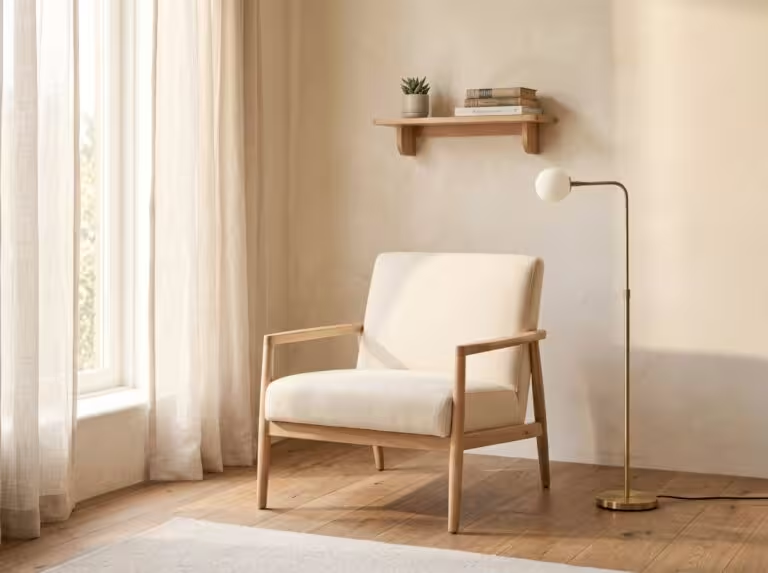
A chair with exposed legs and a narrower profile lets light travel underneath it, keeping a tight corner from feeling closed in. The Ace Lounge Chair, with its low-profile silhouette and exposed parawood frame, is built exactly for this kind of restraint — slim arms, a light visual footprint, and the option of performance fabric like Thames Cream or top-grain leather. Priced from $999.00 through 2Modern, it brings genuine comfort into a small corner without asking that corner to give up its breathing room.
Pros
- Leggy, lighter footprint that keeps small spaces open.
- A good balance of structure and comfort—more “chair” than “blob,” in the best way.
- Works in both living rooms and dedicated nooks.
Cons
- Less enveloping than a barrel or wingback—some readers want more cocoon.
- Slim profiles can feel less plush without an ottoman.
Who it’s for
- Small reading corners where visual weight matters.
- Anyone who wants a chair that can move rooms over time.
Who shouldn’t buy
- If you want deep, enveloping “hideaway” seating above all else.
- If you prefer a high back that supports the head.
Placement guidance
- Place with a task lamp just behind shoulder height to avoid shadows on the page.
- Add an ottoman if you want marathon comfort without committing to a recliner footprint.
Ace Lounge Chair
by Four Hands
Low‑profile lounge chair with exposed parawood frame and slim arms, offered in performance fabrics (e.g., Thames Cream) or top‑grain leather.
Price at time of publishing· Subject to change
Price at time of publishing· Subject to change
Making a Corner Work Without Crowding It
Angling a compact chair diagonally into a corner, rather than squaring it against the wall, often makes better use of an awkward space — and creates a more natural, welcoming sightline into the room.
Placing Your Reading Chair for the Best Light
Light does as much for a reading nook as the chair itself.
Window-Adjacent Placement for Natural Light
A chair angled beside — not directly in front of — a window catches daylight without the glare of facing it head-on. This placement remains the gold standard for daytime reading.
Lamp-Only Corners That Still Feel Bright
Corners without natural light access can still feel bright and inviting with the right fixture. A tall, sculptural floor lamp fills this role well, casting a warm pool of light exactly where a book needs it — a category worth exploring further in Sculptural Floor Lamps.
The Chair + Task Lamp + Side Table Formula
The most functional reading nooks follow a simple formula: chair, task lamp, side table, arranged so the light source sits just behind and above shoulder height. An architectural desk lamp suits this setup particularly well, offering directed, adjustable light for close reading — see Architectural Desk Lamps for pairing ideas.
Placement Guidance: The Reading Nook Formula (Measured)
- Light position: place the lamp slightly behind and above shoulder height so the page is lit without glare.
- Side table distance: close enough that a cup can be set down without leaning—roughly 6–10 inches from the chair arm.
- Clearance: keep at least 24–30 inches of space for getting in and out comfortably, especially in corners.
Best Upholstery for a Hard-Wearing Reading Chair
A reading chair earns its keep through daily use, so fabric choice matters as much as silhouette.
Performance Velvet for Depth and Durability
Performance velvet offers rich, light-catching color with treated fibers that resist staining — a fabric that photographs beautifully and holds up to years of use.
Leather for Long-Term Ease
Leather develops character over time rather than losing it, aging into a natural patina that suits a chair meant to be lived in daily. It also wipes clean easily, a practical advantage for a well-used nook.
Bouclé for Tactile, Cozy Texture
Bouclé brings a nubby, tactile softness that feels inherently suited to a reading chair’s purpose — cozy by nature, with a hushed richness in texture. The Bruford leans fully into this quality, offering the kind of fabric that invites touch as much as it invites sitting.
How to Measure a Reading Chair Before Buying Online
A chair bought sight-unseen still needs to fit the body and the room. A few measurements prevent most regrets.
Seat Width and Depth Basics
Confirm seat width accommodates a relaxed, slightly curled posture — generally 20 inches or more — and seat depth suits the sitter’s height without leaving knees unsupported or legs dangling.
Back Height and Arm Clearance
Back height should extend at least to shoulder level for proper support; taller readers may prefer a back that reaches the head. Arm clearance matters too — arms set too close together can pinch hips on a wider frame.
Leaving Room for an Ottoman
If pairing with an ottoman, measure the combined footprint before committing. A chair that fits perfectly alone can crowd a room entirely once its ottoman joins it.
The Reading Nook Arrangements Defining the Look Right Now
Some reading nook arrangements recur again and again across the interiors worth studying — for good reason.
Curved Swivel Chairs in Bouclé
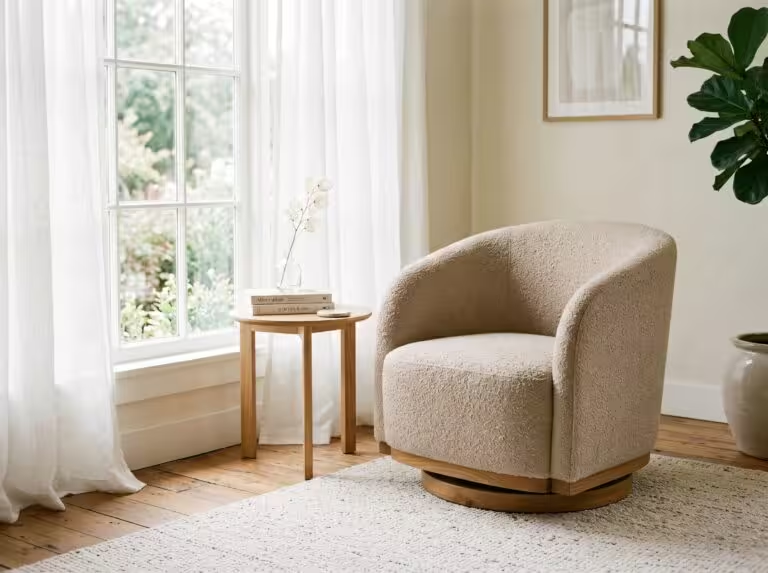
A curved swivel chair in bouclé remains one of the most enduring silhouettes in reading nook design — soft, sculptural, and flexible enough to suit almost any room. The Levi Boucle Swivel Barrel Chair, in Knoll Sand bouclé on a solid-wood frame, fits this look precisely. Compact and round-based, it’s priced at $1,299 through Perigold — a smaller-footprint alternative to the Bruford for nooks with less square footage to spare.
Pros
- Compact swivel logic—flexibility without oversized scale.
- Bouclé softness that reads calm and warm.
- Works well in corners that need one sculptural note.
Cons
- Like most bouclé, it’s best treated gently.
- Compact chairs are less forgiving for sprawling postures.
Who it’s for
- Smaller rooms that still want a true nook moment.
- Readers who love a rounded, sculptural silhouette.
Who shouldn’t buy
- If you want a wide chair-and-a-half posture.
- If you need the most abrasion-proof upholstery possible.
Placement guidance
- Give it a small rug “island” so the nook feels intentional, not incidental.
- Keep the lamp warm and directed; the chair does the softness—light should do the clarity.
Levi Boucle Swivel Barrel Chair
by Four Hands
Compact swivel barrel chair in Knoll Sand bouclé on a round base, with solid-wood frame construction.
Price at time of publishing· Subject to change
Price at time of publishing· Subject to change
Chair-and-Ottoman by a Window
The pairing of a single chair and ottoman positioned beside a window remains a perennial favorite — simple, symmetrical, and endlessly photogenic in natural light.
Layered Lamp and Side Table Styling
The final, most quietly essential detail is rarely the chair itself but what surrounds it: a lamp casting warm light, a side table holding a stack of books, and — just beyond — a shelf within arm’s reach. That shelf-styling layer completes the scene; see Shelf Styling Ideas (coming soon to the Decor journal) for arranging it well.
FAQs: Reading Chairs
What seat depth is best for a reading chair?
Most people find 20–23 inches ideal—deep enough to relax, not so deep that back support disappears.
Wingback vs barrel chair—what’s better?
Wingbacks cocoon and block drafts; barrels feel softer and more sculptural. Choose wingbacks for enclosure, barrels for flexibility and form.
Is a swivel chair good for a reading nook?
Yes, especially near a window. The ability to turn toward the light keeps the nook usable across the day.
Chair-and-ottoman vs recliner—what’s the better choice?
Ottomans give flexibility with less visual weight. Recliners earn their footprint when you want built-in adjustability and have room to spare.
Where should the reading lamp go?
Slightly behind you, aimed down toward the book—enough brightness to read, not so direct that it shines into your eyes.
What’s the best fabric for a hard-wearing reading chair?
Leather and performance fabrics handle daily life best. Bouclé is beautiful for lower-traffic calm corners.
There’s a particular kind of quiet that settles over a corner once the chair is finally right — not just comfortable, but complete. The light falls where it should. The lamp glows warm by evening. And the chair itself disappears into its purpose, exactly as it was meant to.
A reading nook built this well rarely feels like furniture at all. It feels like an invitation. Explore the pieces we return to again and again, and give one corner of the house permission to slow down.
About the author
Mabrouk Mhamdi is the curator behind Apex Illume, an independent editorial guide to refined minimalist interiors—focused on lighting, seating, and décor chosen for proportion, materiality, and long-view design. Recommendations are research-based and selected to reduce decision fatigue with a tighter, more considered edit.