
Statement Couch Ideas: How to Choose a Sculptural Sofa for Your Living Room
By Mabrouk Mhamdi · Curator at Apex Illume
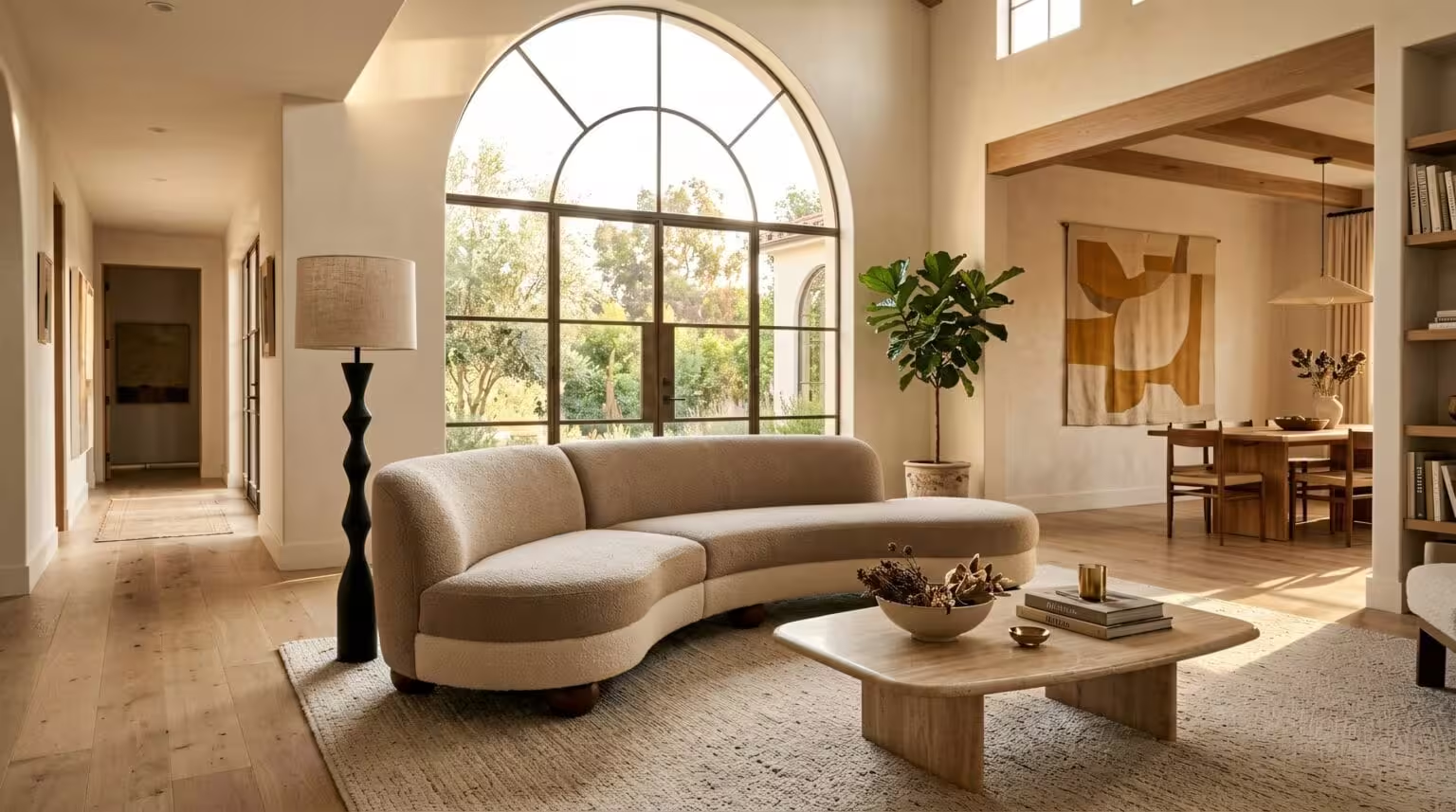
Walk into a room built around one confident curve, and the eye doesn’t wander — it settles. Before the rug registers, before the art on the wall announces itself, the sofa has already made its case. This is what a true statement couch does. It doesn’t wait to be noticed. It reorganizes the room around itself, quietly and completely.
A sofa this size was always going to be the room’s largest object. The question is whether it becomes its center of gravity — the piece everything else is arranged in relation to — or simply its biggest piece of furniture. The difference lies entirely in the choices that follow.
“Apex Illume is reader-supported. When you purchase through links on our site, we may earn an affiliate commission at no extra cost to you.”
How We Chose the Shapes and Featured Sofas
A statement sofa has one job: become the room’s center of gravity without making the room feel smaller. For this guide, I focused on silhouettes with clear architectural intent (curves that soften, sectionals that anchor, straight frames that settle a room), and on livability signals—dimensions that make sense, upholstery choices that survive daily use, and shapes that don’t require constant styling to look resolved.
Finding the Right Fit — Scale and Silhouette Before Anything Else
A sculptural sofa asks more of a room than a standard one. Getting the scale right is what separates a statement from a squeeze.
Reading Curve vs. Straight in Your Actual Room
Curves soften a room’s geometry, lending it a more sculptural quality — but they demand a slightly different kind of space, one where the eye can trace the sofa’s arc without hitting a wall too soon. Straight silhouettes, by contrast, tuck more efficiently into corners and defined room edges. Neither is superior; the room dictates the answer.
Seat Depth and Scale Cues That Prevent Overwhelm
A seat depth beyond 24 inches starts to feel generous rather than gracious — lovely for lounging, less forgiving in a smaller footprint. Measure the room’s clear floor space before falling for a silhouette, and remember that a sculptural shape needs breathing room on all sides to feel like sculpture rather than obstruction.
Testing a Curved Silhouette Before You Commit
Painter’s tape on the floor remains the simplest way to test a curve. Trace the sofa’s actual footprint — arc included — and live with it for a few days. A curve that looked effortless in a showroom can behave differently once it’s negotiating with a doorway or a window seat.
Curved, Sectional, or Straight — Which Shape Earns Its Place
Every room has a shape it wants to be filled with. The work is in listening for it.
Curved Sofas for Open-Plan Flow
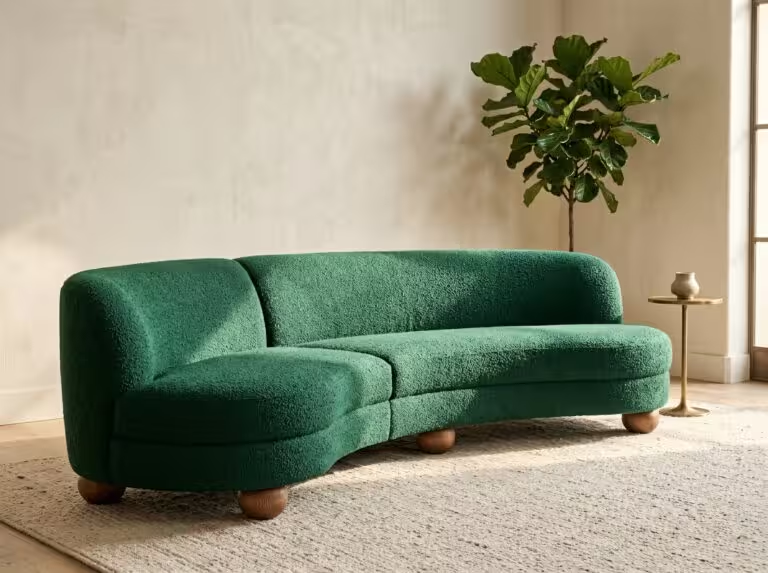
In open-plan rooms, a curved sofa softens the transition between zones — living, dining, entry — without the hard stop of a squared-off arm. The Caracole Tulum 3-Seater Sofa exemplifies this ease: a gently curved frame in two-tone bouclé, set on rounded ash feet, at 90 inches wide and 31 inches high. It behaves like sculpture first, seating second — precisely the effect an open floor plan rewards. Priced at $3,900 through 2Modern, it lets a room breathe around it rather than close in.
Pros
- A curve that reads sculptural without feeling theatrical.
- Bouclé texture does quiet work—depth without needing bold pattern.
- Strong choice for open-plan rooms where furniture must shape the space.
Cons
- Curves ask for floor space; they’re rarely forgiving in narrow rooms.
- Bouclé is best when treated with a little respect in high-chaos households.
Who it’s for
- Open-plan living rooms that need a soft boundary between zones.
- Anyone who wants the sofa to feel like a piece of form, not just seating.
- Rooms with enough negative space for the curve to be read cleanly.
Who shouldn’t buy
- If your living room is tight and every inch is negotiated.
- If you want the simplest, most utilitarian upholstery for kids/pets.
Placement guidance
- Float it when possible—curves need air behind them to look intentional.
- Pair with an oval or round coffee table to keep the geometry in conversation.
Caracole Tulum 3-Seater Sofa
by Caracole
two‑tone bouclé fabric with rounded wood feet
Price at time of publishing· Subject to change
US only
Sectionals for Anchoring Larger Rooms
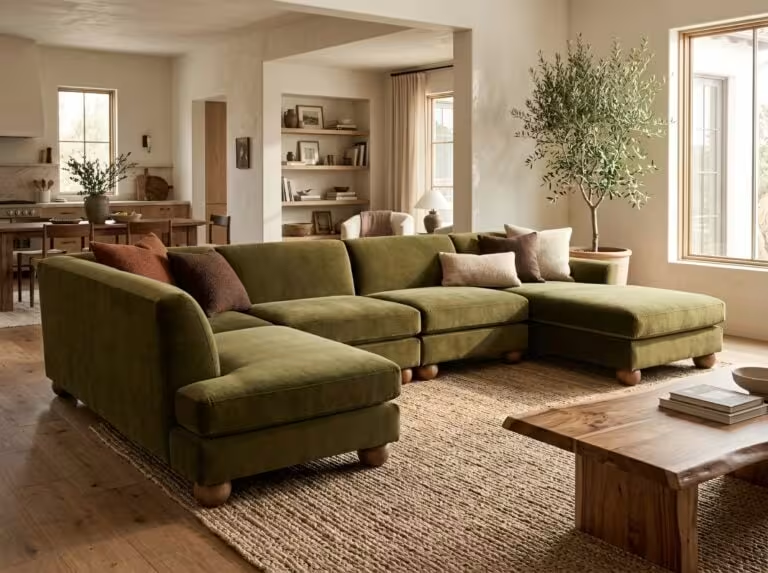
Larger rooms with real seating demands call for a sectional with structural presence. The Four Hands Phillip 2PC RAF Sectional in Surrey Olive Performance Velvet answers this precisely: an L-shaped, 119-inch-wide silhouette with a 24-inch seat depth and sinuous-spring support, upholstered in a deep, grounded olive velvet. At $4,964 through Perigold, it anchors a room the way only a piece of this scale can — substantial without tipping into bulk.
Pros
- True anchoring scale for larger rooms.
- Performance velvet gives depth without fragility.
- Sectional logic: it organizes a room quickly and confidently.
Cons
- Big silhouettes reduce layout flexibility—commitment is part of the deal.
- Deep seating can be less comfortable for shorter sitters without extra back pillows.
Who it’s for
- Larger living rooms that need structure and plenty of seating.
- Anyone who wants a rich, grounded color that holds the room steady.
- Households that actually use their sofa daily.
Who shouldn’t buy
- If you rearrange furniture often or move frequently.
- If your room is small and you’re trying to preserve visual lightness.
Placement guidance
- Back it to a wall when space is limited; let the open side face the room.
- Keep 30 inches minimum around key pathways so the sectional doesn’t become a boundary you fight.
Phillip 2PC RAF Sectional in Surrey Olive Performance Velvet
by Four Hands
two‑tone bouclé fabric with rounded wood feet
Price at time of publishing· Subject to change
US only
Straight Silhouettes for Small or Formal Spaces
A straight-backed sofa often feels more settled than a curve fighting for space it doesn’t have — which is precisely why smaller or more formal rooms tend to favor it. Clean lines suit spaces where symmetry matters more than sculptural drama.
Upholstery That Lives as Boldly as It Looks
A statement couch has to survive its own statement. Fabric is where that promise is kept or broken.
Performance Velvet for Depth Without Delicacy
Performance velvet delivers the visual richness of traditional velvet — a deep, light-shifting nap — without the fragility. Treated fibers resist staining and crushing, which matters enormously on a piece fielding this much daily use. The Surrey Olive velvet on the Four Hands Phillip sectional makes the case clearly: a hue and texture rich enough to anchor a room, resilient enough not to demand babying.
Leather for Ease and Patina
Leather ages rather than wears out, gaining character with each year instead of losing it. It suits a statement couch that wants warmth and minimal upkeep in equal measure — a piece that only grows more interesting with time.
Bouclé for Texture-Forward Softness
Bouclé brings a tactile, quietly opulent texture that photographs beautifully and forgives the small scuffs of daily life. The two-tone bouclé on the Caracole Tulum Sofa uses this to full advantage — texture doing as much visual work as the curve itself.
Color Confidence — Choosing a Hue You Won't Outgrow
A bold color commitment on a piece this size deserves more thought than a swatch glanced at under store lighting.
Reading Jade, Rust, and Cobalt in Real Light
Saturated hues shift dramatically between showroom lighting and home lighting. Jade can slip toward gray in low light; rust can turn nearly terracotta at midday. Always view a fabric swatch in the actual room, at the actual hours it will be lived in, before committing.
A Simple Framework for Long-View Color Decisions
The safest long-view strategy: choose a hue you’d still want to see in five years of photographs. Trends cycle quickly; a color chosen because it feels inevitable — not merely fashionable — tends to outlast them. A grounded tone like olive performance velvet, or a soft neutral bouclé, both pass this test by leaning timeless over of-the-moment.
Styling the Room Around the Sofa — Not the Other Way Around
Once the sofa is chosen, everything else in the room exists in relation to it.
Rug and Coffee Table Proportions for Curved or Sculptural Shapes
A curved sofa pairs naturally with round or oval coffee tables — the shared geometry keeps the room’s lines in conversation rather than conflict. Rugs should extend a few inches beyond the sofa’s front legs, keeping the piece visually tethered without cutting it off at the knees.
Art and Wall Styling That Complements Without Competing
The space above a statement couch is prime real estate, and a gallery wall arrangement is one of the most requested ways to fill it. Done well, it draws the eye upward without pulling attention from the sofa’s shape below — a layering technique explored in more depth in Gallery Wall Ideas (coming soon to the Decor journal).
Texture-Mixing That Keeps the Sofa as the Hero
Layering textures — a woven throw, a mix of pillow fabrics, a nubby rug underfoot — adds depth without visual competition. A few well-chosen throw pillows, arranged with intention rather than symmetry, can echo the sofa’s palette while letting it remain the room’s clear focal point; see Throw Pillow Arrangement (coming soon to the Decor journal) for pairing logic.
Where the Statement Couch Belongs — Floating vs. Against the Wall
Placement determines whether a sculptural sofa gets to perform or simply gets pushed into a corner.
Floating a Curved Sofa for Maximum Impact
Curved sofas come alive when floated away from the wall — the shape needs space on both sides to feel intentional rather than accidental. A sofa this shape becomes the room’s centerpiece, especially in open-plan layouts. A sculptural floor lamp beside it fills the vertical space a floated piece leaves behind, standing in for the wall-mounted lighting a backed-up sofa would otherwise rely on — a pairing worth exploring in Sculptural Floor Lamps.
When Anchoring to a Wall Makes More Sense
Straight silhouettes and structured sectionals often feel more resolved anchored to a wall — particularly in smaller rooms where floor space is at a premium. The Four Hands Phillip sectional, given its scale, tends to work best backed against a wall, freeing the room’s remaining footprint for movement.
Keeping Pathways Open Around a Bold Shape
Regardless of placement, maintain at least 30 inches of clearance for walking paths. A sculptural sofa loses its impact entirely if visitors have to navigate around it like an obstacle.
Placement Cheat Sheet (So the Sofa Feels Like Sculpture, Not Obstruction)
- Coffee table distance: aim for 14–18 inches from the sofa edge.
- Main walkways: keep 30–36 inches clear.
- Rug scale: the rug should extend past the sofa’s front legs so the piece feels anchored, not floating on its own island.
- Curves: float when possible; if it must go near a wall, leave a little air so the curve doesn’t feel “flattened.”
Small-Space Statement Couch Ideas That Don't Overwhelm
A small room doesn’t disqualify a statement — it simply calls for restraint in scale, not ambition.
Compact Curves and Leggy Frames
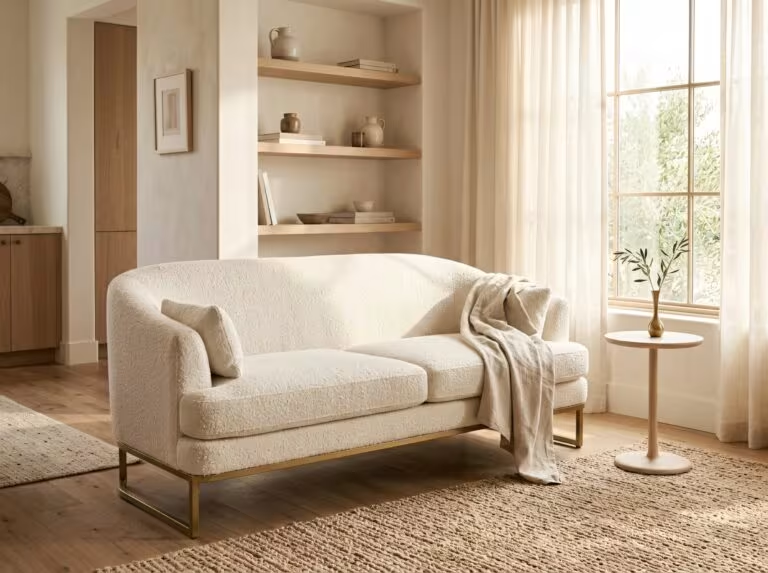
A smaller curved silhouette on a slim, exposed base delivers sculptural presence without visual density. The Normann Copenhagen Rar 2-Seater Sofa in Venezia off-white does exactly this: 67.13 inches wide, set on a slim powder-coated steel base, upholstered in a soft linen-blend fabric. At $2,341 through Finnish Design Shop, it brings sculptural confidence into a footprint that respects a smaller room’s limits.
Pros
- Sculptural presence without heavy visual mass.
- Slim base keeps a small room feeling open.
- A strong option when you want “statement” without oversized scale.
Cons
- Smaller sofas are less forgiving for sprawling loungers.
- Light upholstery can demand more care in daily-use households.
Who it’s for
- Small living rooms or apartments that still want one confident shape.
- Anyone building a lighter, airy room where the sofa shouldn’t dominate.
Who shouldn’t buy
- If your top priority is deep, all-day lounging for multiple people.
- If you want the most stain-forgiving choice possible.
Placement guidance
- Give it a rug that extends beyond the front legs—this keeps it grounded.
- Keep side tables light and minimal; let the silhouette stay the hero.
Normann Copenhagen Rar 2-Seater Sofa
by Normann Copenhagen
Surrey Olive performance velvet
Price at time of publishing· Subject to change
Price at time of publishing· Subject to change
Light-Handed Styling That Preserves Airiness
Restraint in styling matters as much as restraint in scale when the room is small. A single textured throw, one considered pillow pairing, and a rug sized to the room — not the sofa — keep a compact statement piece feeling open rather than crowded.
FAQs: Statement Sofas
How do I know if a curved sofa will work in my room?
Tape the footprint on the floor (arc included) and live with it for a few days. If the curve blocks pathways or makes the room feel pinched, the room is telling you the answer.
What seat depth is best for a statement couch?
Around 21–24 inches is a comfortable middle ground for most people. Deeper seats can feel luxurious, but they’re less universally comfortable without extra pillows.
What’s the best fabric if I want a bold look but real durability?
Performance velvet is often the sweet spot: visually rich, less delicate than traditional velvet, and forgiving of daily use.
Should a statement sofa go against the wall or float?
Curves typically look best floated. Straight silhouettes and sectionals often look more resolved against a wall—especially in smaller rooms.
What coffee table shape works best with a sculptural sofa?
Curves pair beautifully with round or oval tables. Straight sofas can take either—rectangles for structure, ovals for softness.
How much space should be around the sofa?
Try to preserve 30 inches of clear walking path. Less than that turns a focal piece into a constant navigation problem.
How do I keep the room from feeling “too designed”?
Let one piece lead. If the sofa is sculptural, keep the supporting cast quieter—simple side tables, restrained textiles, and lighting that adds warmth without stealing the scene.
There’s a particular kind of quiet that settles into a room once the sofa is finally right — not loud, not overdone, simply resolved. The curve holds its line. The color holds exactly as intended in the afternoon light. And the room, once uncertain, now carries itself with confidence.
A single sculptural sofa, chosen well, rarely announces itself as furniture. It reads as instinct. Explore the pieces we return to again and again, and let one shape define the room’s center of gravity.
About the author
Mabrouk Mhamdi is the curator behind Apex Illume, an independent editorial guide to refined minimalist interiors—focused on lighting, seating, and décor chosen for proportion, materiality, and long-view design. Recommendations are research-based and selected to reduce decision fatigue with a tighter, more considered edit.