
Best Dining Chairs: A Designer's Guide to Comfort, Style & Function
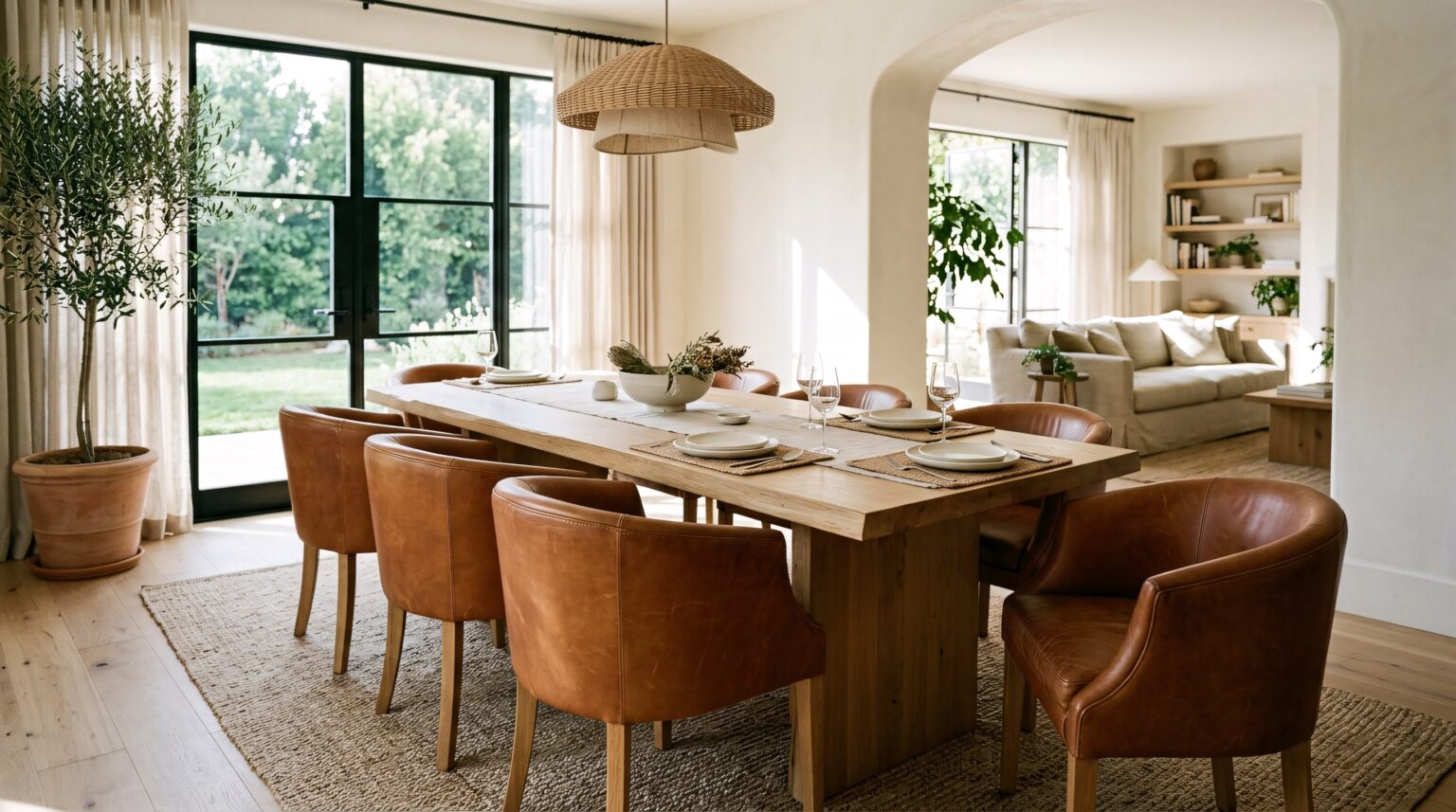
The best dinners are the ones that outlast the meal itself — where dessert plates sit empty for an hour while the conversation keeps going, where no one thinks to check the time. This kind of evening depends on more than good company. It depends on chairs that disappear.
A dining chair felt in the first five minutes has already failed. The ones worth sourcing are felt in the third hour — quietly supportive, structurally sound, unremarkable in exactly the right way. This is a guide to finding those chairs: the ones that hold a room’s style and its guests in equal, effortless measure.
“Apex Illume is reader-supported. When you purchase through links on our site, we may earn an affiliate commission at no extra cost to you.”
Comfort That Lasts All Night — Choosing Dining Chairs Built for Long Meals
A chair’s comfort reveals itself slowly. The measurements below are what separate a seat that flatters from one that endures.
Seat Height and Table Clearance
Standard dining tables sit around 28 to 30 inches high, which calls for a seat height between 17 and 19 inches — enough clearance for knees, not so much that elbows land awkwardly on the tabletop. This small margin is often the difference between a chair that feels tailored and one that feels borrowed.
Back Angle and Lumbar Support
A back angled slightly beyond vertical — even a few degrees — offers meaningfully more support over a long meal than a perfectly upright frame. The most livable dining chairs curve gently at the lumbar, cradling the lower back without tipping into recliner territory.
Cushion Density That Holds Up Through Dessert
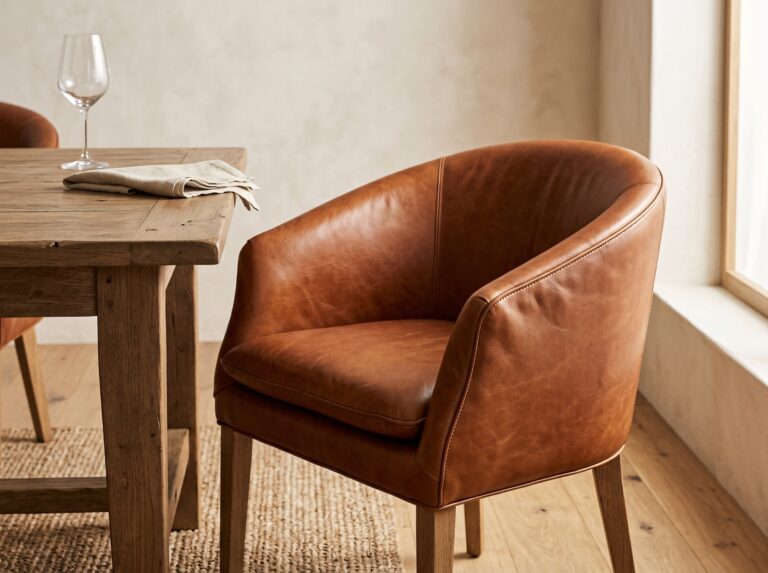
Cushion density matters more than cushion thickness. A dense, well-structured foam holds its shape through a two-hour dinner; a soft, overly plush seat compresses within the first twenty minutes and never quite recovers. The Halstead Dining Chair, with its low wraparound barrel back and cushioned leather seat in Cognac, strikes this balance precisely — structured enough to hold form, soft enough to disappear beneath a guest who’s stopped noticing they’re sitting in it. Priced at $431.20 through Lumens, it’s the kind of chair built for the meals that run long, best enjoyed beneath the soft wash of light from a well-placed pendant — the sort explored in Linear Suspension Fixtures.
Halstead Dining Chair
Lumens
Leather‑upholstered dining armchair with a low wraparound barrel back and cushioned seat; shown in Cognac Leather
Spacing and Scale — How Many Chairs Actually Fit
A table can only hold as many chairs as its edges allow — comfortably, not just numerically.
Per-Person Spacing Guidelines
Allow roughly 24 inches of table width per seated guest. Crowd beyond this, and elbows start negotiating for territory mid-meal — a small discomfort that undoes an otherwise beautiful table setting.
Walkway Clearance Behind Every Seat
Leave a minimum of 36 inches behind each chair for comfortable passage, especially in rooms doubling as a walkway to the kitchen. This clearance also accounts for the chair’s full pushed-back depth — a detail easy to underestimate until the room feels tight.
Upholstery That Lives as Beautifully as It Looks
Fabric determines how gracefully a chair survives its own daily use.
Performance Fabric for Everyday Resilience
Performance fabric resists spills and staining without sacrificing softness — an especially valuable trait at a table that sees daily meals rather than occasional dinners.
Leather for Wipeable Ease and Patina
Leather wipes clean in seconds and only grows more distinguished with age, developing the kind of soft patina that makes a chair feel more established each year rather than more worn. The Cognac leather on the Halstead Dining Chair exemplifies this quality — rich now, richer in a decade.
Linen for Softness in Lower-Traffic Settings
Linen brings a tactile, relaxed softness better suited to dining rooms reserved for special occasions than to daily family meals. Its natural texture carries a relaxed, refined quality, though it asks for a gentler hand than performance fabric or leather.
Armchairs vs. Side Chairs — Where Armrests Earn Their Place
Arms change more than a chair’s silhouette — they change how a table functions.
Anchoring the Ends With Armchairs
Placing an armchair at each head of the table is one of the most reliable ways to add visual weight and hierarchy to a dining set, without requiring a full matching set of arms throughout.
When a Full Set of Arms Makes Sense
In more formal or spacious dining rooms, arms all around can feel intentional rather than excessive — particularly when the table has generous per-seat spacing to accommodate the added width.
Footprint and Accessibility Tradeoffs
Armchairs typically require two to four additional inches of clearance per seat. In tighter dining rooms, side chairs preserve flow and make seating easier for guests to navigate without maneuvering around fixed arms.
Mixing and Matching Dining Chairs the Right Way
A table doesn’t require a uniform set to feel resolved — it requires a shared thread.
Coordinating Finishes Without Matching Exactly
The most successful mixed dining sets share one unifying element — a wood tone, a metal finish, or a common upholstery color — even as silhouettes vary. This approach borrows the same layering logic used throughout a home’s broader decor, detailed further in How to Layer Home Decor.
Keeping Seat Heights Consistent Across Styles
Regardless of how different the chairs look, seat heights should align within an inch of each other. This consistency keeps the eye reading the table as a cohesive whole rather than a mismatched collection.
Small Dining Space Ideas That Preserve Flow
A compact dining space doesn’t rule out personality — it simply asks for a lighter visual footprint.
Slim and Leggy Silhouettes
Chairs with exposed, slender legs let light pass beneath them, keeping a small room feeling open rather than closed in. This is scale management at its most effective — presence without density.
Stackable Chairs for Flexible Rooms
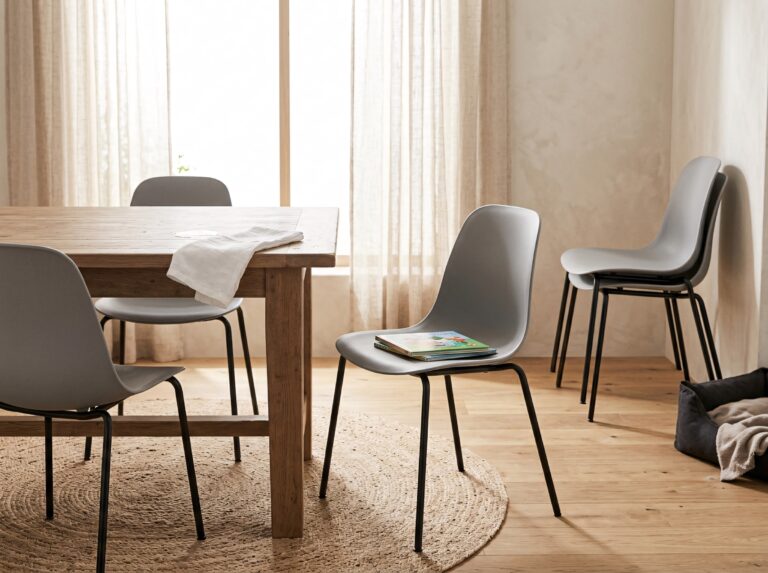
Stackable chairs solve a real problem in smaller or multi-use dining spaces: the need to reclaim floor space when the table isn’t in use. The Normann Copenhagen Form Chair, Stacking, Black Steel offers exactly this flexibility — a polypropylene shell on a black powder-coated steel base, easy to wipe clean and just as easy to stack away when the room needs to breathe. At $266.00 through Finnish Design Shop, it’s a practical answer dressed in a boldly sculptural silhouette.
Normann Copenhagen Form Chair, Stacking, Black Steel
Finnish Design Shop
polypropylene – powder‑coated steel
Kid- and Pet-Friendly Dining Chairs That Still Look Elevated
Durability and style are not opposing goals — they simply require the right materials.
Wipeable, Performance-Grade Textiles
A wipeable surface changes the entire calculus of a family dining table. The Normann Copenhagen Form Chair’s easy-wipe polypropylene shell handles daily spills without ceremony, making it as sensible for a household with young children as it is visually striking on its own.
Sturdy Construction That Withstands Daily Life
A steel base, like the one beneath the Form Chair, adds structural confidence that a dining chair fielding daily wear-and-tear genuinely needs — sturdy enough for climbing toddlers and restless pets alike, without ever looking utilitarian.
The Finishes Defining This Season's Best Tables
Some silhouettes move beyond trend and into genuine staying power. These are the details moving from trend report to lasting signature.
Cane Detailing for Texture and Light
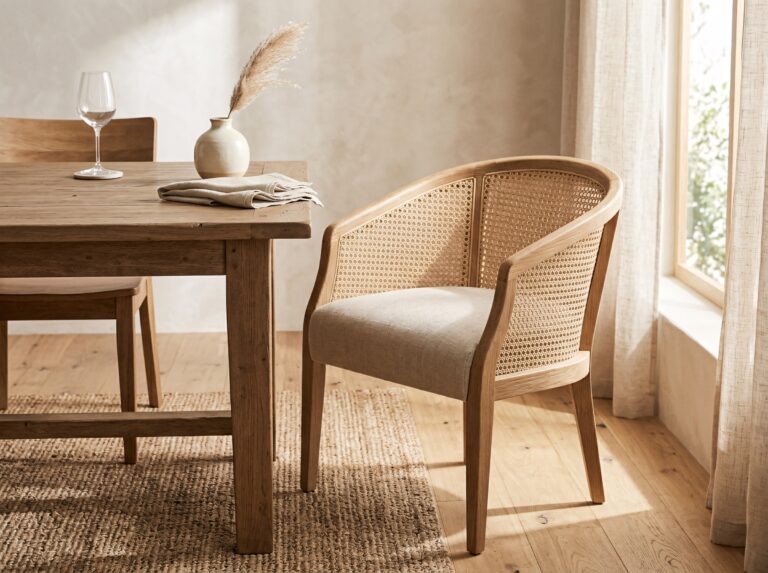
Cane brings a woven, light-filtering texture that softens a dining room’s overall visual weight. The Britt Dining Chair captures this appeal precisely — a solid wood frame paired with natural cane inlay and a neutral, high-performance linen-blend seat. Priced at $399.20 through Lumens, it feels effortlessly textural, the kind of chair that photographs as beautifully as it performs.
Britt Dining Chair
Lumens
Solid wood – natural cane – linen‑blend upholstered
Bouclé for Tactile, Quietly Opulent Softness
Bouclé continues its reign as the texture of the moment — a nubby, tactile softness that adds warmth to a dining chair without veering precious. It suits dining rooms that want a plush counterpoint to a hard-surfaced table.
Black Wood and Metal Frames for Graphic Contrast
A black frame — whether wood or steel — brings graphic definition to a dining set, grounding lighter upholstery and giving the whole table a more architectural silhouette. It’s a detail that carries confident restraint rather than starkness.
There’s a particular kind of gathering that only happens around the right table — one where the chairs never once interrupt the evening. Dessert plates linger. Conversation stretches past when it should have ended. No one adjusts their seat or angles away from an uncomfortable armrest.
This is what the right dining chairs deliver: not just style, but the quiet permission to stay a little longer. Explore the pieces we return to again and again, and build a table worth lingering at.