
How to Layer Home Decor: A Designer's Method for a Collected, Considered Room
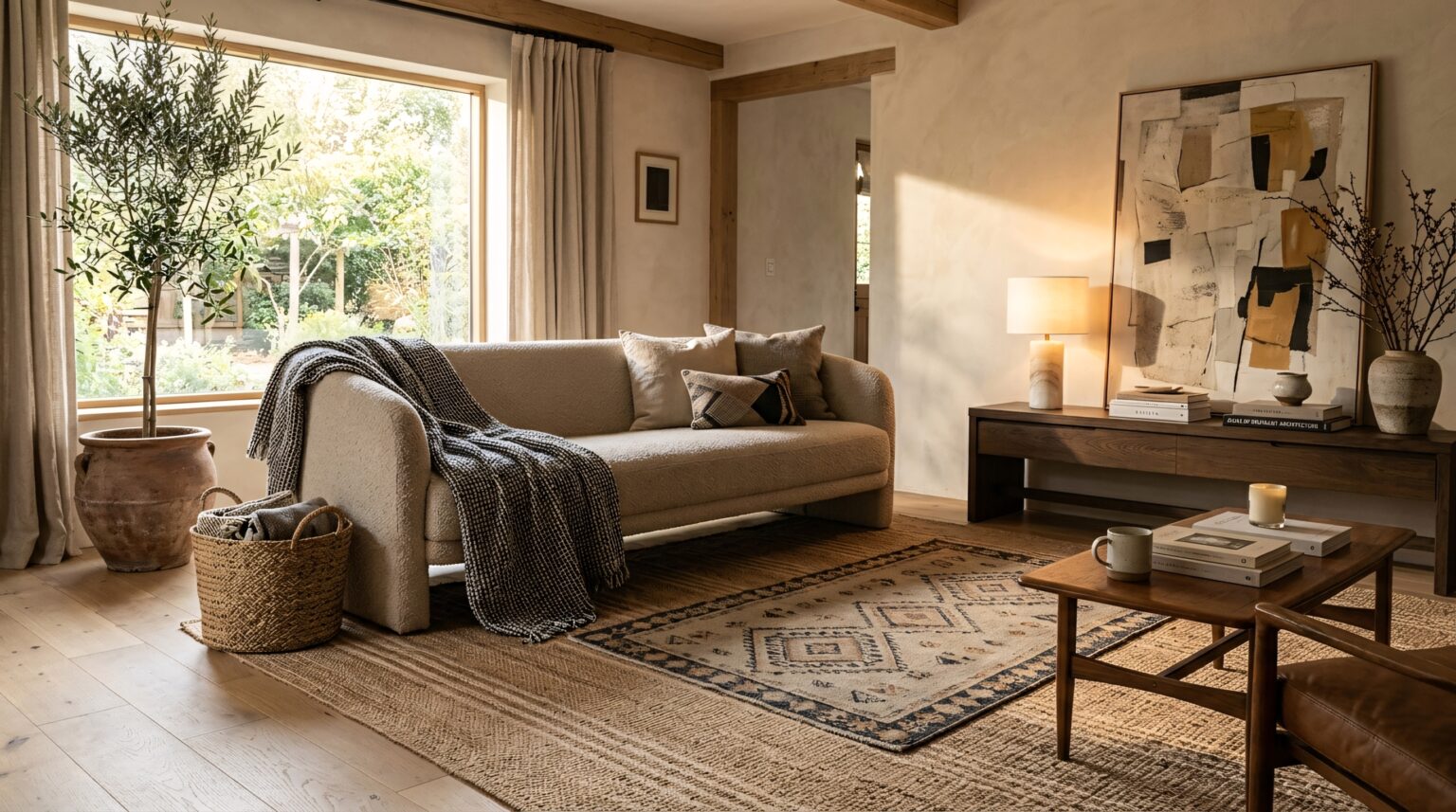
There’s a particular room that comes to mind when people talk about a home that feels finished. Light pools across a rug in the late afternoon. A throw sits draped with just enough imprecision to look unstaged. Objects on the shelf seem to have arrived over years, not been placed in a single Saturday afternoon.
That room didn’t happen by accident, and it didn’t happen through more shopping. It happened through layering — the slow, deliberate accumulation of texture, light, and object that separates a room that’s furnished from one that’s truly finished. This is the method behind it.
Apex Illume is reader-supported. When you purchase through links on our site, we may earn an affiliate commission at no extra cost to you.
What Is Layered Home Decor, and Why Does It Make a Room Feel Finished
Layering is often mistaken for maximalism. It isn’t. It’s depth — the sense that a room has more than one thing happening at eye level, at ankle level, at the ceiling.
Depth, Comfort, and the "Collected" Feeling
A layered room feels collected because it draws from more than one moment in time and more than one texture. A smooth linen sofa against a nubby wool rug. A hard-edged coffee table softened by a stack of worn books. This contrast is what creates the sense that a room has been lived in rather than assembled.
Why Layering Feels Intentional, Not Excessive
The difference between layered and cluttered comes down to restraint within abundance. Each layer should serve a purpose — warmth, light, texture, focal interest — rather than simply filling space. A room with five thoughtful layers will always feel calmer than one with three careless ones.
The Designer Order for Layering a Living Room
Layering has a sequence, and skipping steps is the most common reason a room never quite resolves.
Start With the Floor
Flooring sets the room’s undertone before anything else enters it — the warmth of a wood grain, the coolness of stone, the texture underfoot that every other layer will eventually sit on top of.
Place Anchor Furniture First
The largest pieces — sofa, sectional, primary seating — should be placed before any styling begins. A room’s furniture arrangement, including any supporting seating like a well-placed accent chair, should already feel resolved and comfortable before a single throw pillow enters the conversation; see Comfortable Accent Chairs for guidance on choosing pieces that complement rather than compete with a primary sofa.
Layer the Rug Beneath It
A rug placed beneath the anchor furniture — not simply in front of it — grounds the seating arrangement and defines the room’s primary zone. This is the layer most often placed last by instinct and first by design.
Build in Lighting Before Textiles
Lighting should be resolved before soft goods arrive, since fixtures often dictate where a side table or reading chair can realistically go. Get the light sources right first, and the textiles that follow will have somewhere purposeful to land.
Add Textiles for Warmth and Texture
Throws, pillows, and secondary rugs are where a room starts to feel touchable rather than just visually complete. It’s best introduced gradually, over weeks rather than in a single sitting.
Finish With Art and Objects
Art and small objects are the final layer because they respond to everything beneath them — the wall color already set by furniture placement, the palette already established by textiles. This is the layer that makes a room feel personal rather than staged.
Layered Lighting 101 — Balancing Ambient, Task, and Accent Light
A room’s lighting should work in layers just as much as its textiles do — no single source doing all the work.
Ambient Light as the Foundation
Ambient light — overhead fixtures, larger lamps — establishes the room’s baseline glow. It should be soft enough to live with in the evening without ever feeling like the only option in the room.
Task Light for Function and Focus
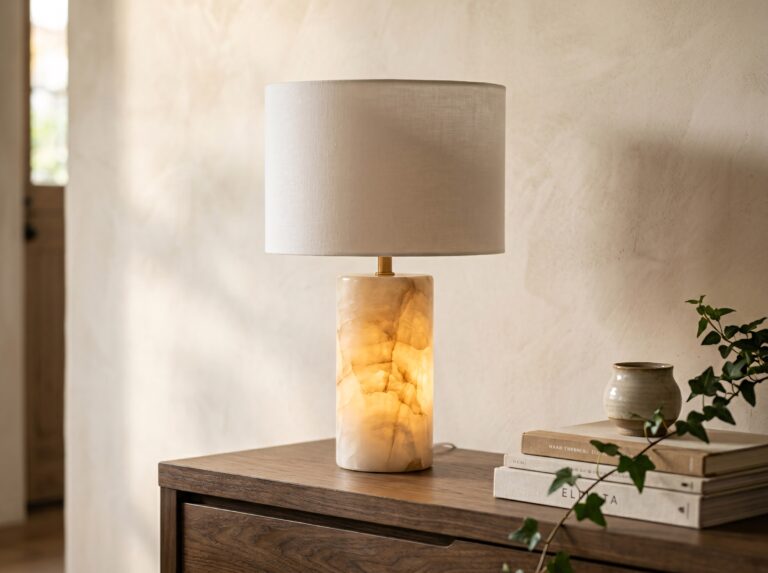
Task lighting exists to serve a specific activity: reading, working, cooking. A compact, well-placed table lamp does this beautifully in a living room setting. The Firma Table Lamp, with its cylindrical Spanish alabaster base and white linen shade, offers exactly this kind of quiet, functional glow — small enough for a side table, substantial enough in material to feel like more than an afterthought. At $265 through Lightology, it earns its place twice over — practical light paired with genuine material beauty.
Firma Table Lamp
Beacon Lighting
Compact table lamp with a cylindrical Spanish alabaster base and a white linen shade
Accent Light for Mood and Drama
Accent lighting — picture lights, uplighting, small decorative fixtures — exists purely for atmosphere. It’s the layer most rooms skip entirely, and the one that most reliably makes an evening room feel finished rather than merely lit. For a deeper dive into building out this full lighting hierarchy, see Six Pillars of Luxury Lighting
How to Layer Rugs Without Creating Trip Hazards
Rug layering is one of the most visually rewarding techniques in a designer’s toolkit — and one of the easiest to get structurally wrong.
Choosing a Jute or Natural-Fiber Base
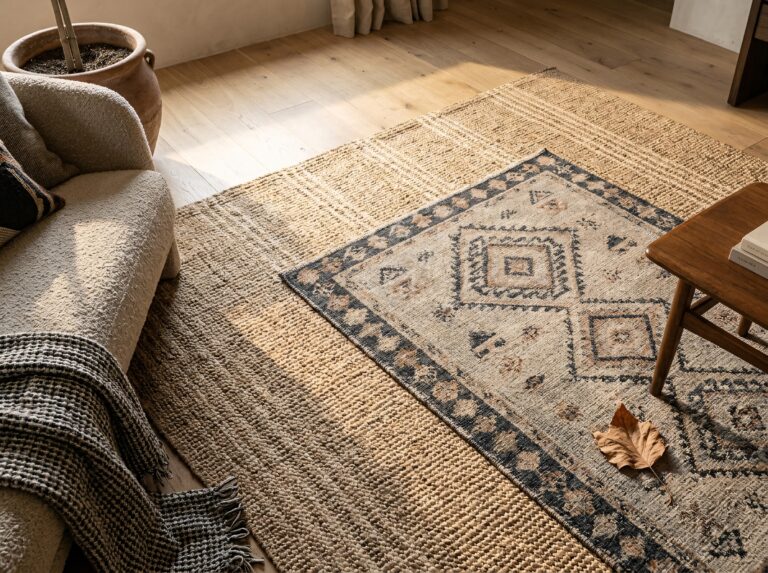
A natural-fiber base rug establishes texture and warmth across the widest footprint of the room. The Panama Jute / Sisal Area Rug in Beige is a strong example of this foundational layer — a handwoven jute and sisal blend in a simple cross-stripe weave, sized generously at 96 by 120 inches with a low half-inch pile. Priced at $656 through Perigold, it’s substantial enough to anchor a full seating area while staying low-profile enough to layer beneath a second rug.
Panama Jute / Sisal Area Rug in Beige
Villa by Classic Home
Handwoven jute/sisal rug in beige with a simple cross‑stripe weave; size 96″ W x 120″ L with 0.5″ pile height.
Topping With Wool or Pattern for Contrast
A smaller wool or patterned rug placed on top of the jute base adds visual interest and softness underfoot, particularly beneath a coffee table or in front of a favorite chair. The contrast in texture between the two materials is what keeps the effect looking intentional rather than accidental.
Sizing and Placement Rules That Keep Walkways Safe
The top rug should sit fully within the borders of the base rug, with no overlapping edges that could catch a foot mid-stride. A half-inch pile height, like that of the Panama Jute Rug, also helps minimize any noticeable step-up between layers.
The Coffee Table, Shelf, and Mantel Layering Formula
Flat surfaces are where layering either looks effortless or starts to look busy. The difference lies in ratio.
Height and Scale Ratios That Look Intentional
A dependable formula: one tall object, one medium object, one low or flat object, grouped in odd numbers. This simple height variation is what keeps a surface visually interesting without requiring a design degree to execute.
Mixing Textures Without Creating Clutter
Pairing a hard-surfaced object — ceramic, stone, glass — with something soft, like a small stack of linen-bound books, adds tactile variety. The goal is always variety within restraint: three or four objects, thoughtfully mixed, rather than every treasured item displayed at once.
Small-Space Layering That Adds Warmth Without Crowding
A small room can absorb just as much layering as a large one — it simply requires more editing along the way.
Editing Down Before Layering Up
Before adding new layers, remove anything currently doing double duty as visual noise. A small space layers well only once its existing clutter has been cleared.
Furniture Scale That Preserves Walkway Flow
Choose furniture with slimmer profiles and exposed legs in tighter rooms, preserving enough visible floor to keep the space feeling open even as layers accumulate on top of it.
Light Layering Tricks for Tiny Rooms
A single well-placed accent lamp, like the Firma Table Lamp, can add an entire layer of warmth to a small room without consuming any meaningful floor space — proof that layering in a compact room is about precision, not quantity.
Kid- and Pet-Friendly Layering That Actually Holds Up
A layered room shouldn’t mean a fragile one. Durability and warmth can coexist with the right material choices.
Performance Fabrics Worth Building Around
Performance textiles resist staining and wear without sacrificing the tactile softness layering depends on, making them a smart foundation for any household with kids or pets in regular rotation through the living room.
Washable Rugs for Real Daily Life
A washable or easily cleaned rug in high-traffic zones lets a layered look survive daily spills and muddy paws without constant anxiety — durability and design working in the same direction rather than against each other.
Layered Bedding, Step-by-Step
Bedding follows the same layering logic as a living room, scaled down to a single surface.
The Pillow-Count Formula That Looks Plush, Not Fussy
A dependable bedding formula: two sleeping pillows, two decorative shams, one lumbar or accent pillow. This keeps the arrangement looking plush without tipping into a pile that has to be removed nightly just to sleep.
Throws and Textures That Photograph Well and Sleep Cool
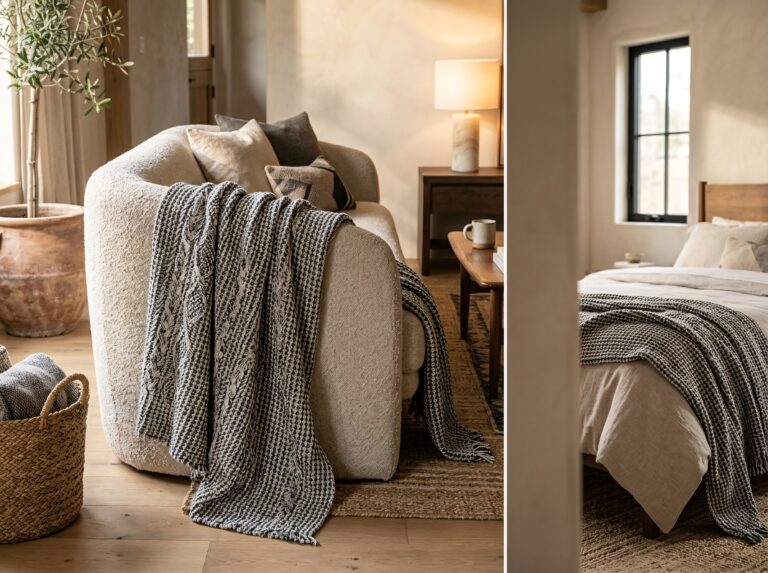
A throw draped at the foot of the bed adds the same finishing texture a living room throw provides — visual warmth without added bulk. The Thread Throw in Black-White, handwoven from a 70% wool and 30% cotton blend, brings exactly this kind of tactile, graphic layer to a bed or sofa alike. At 55 by 71 inches and priced at $140 through Finnish Design Shop, it’s generously sized enough to photograph beautifully while remaining light enough not to overheat a bed styled for actual sleep.
Thread Throw in Black-White
Tom Dixon
Handwoven 70% wool / 30% cotton throw in a black‑and‑white weave; measures 55.12″ x 70.87″
Arm Height for Resting, Not Just Reaching
Arms should sit low enough to rest a forearm naturally, not so high that shoulders creep upward to reach them. A reading chair’s arms exist to hold a book, a cup of tea, or simply the weight of a relaxed hand — not to prop up posture.
There’s a particular kind of room that only comes from layering slowly — a rug added one season, a lamp discovered the next, a throw that finally felt right after months of looking. None of it arrived at once, and none of it needs to.
A room built this way rarely feels decorated. It feels like it belongs to the people living in it. Explore the pieces we return to again and again, and let your own rooms take the time they need to feel finished.