
How to Layer Home Decor: A Designer's Method for a Collected, Considered Room
By Mabrouk Mhamdi · Curator at Apex Illume
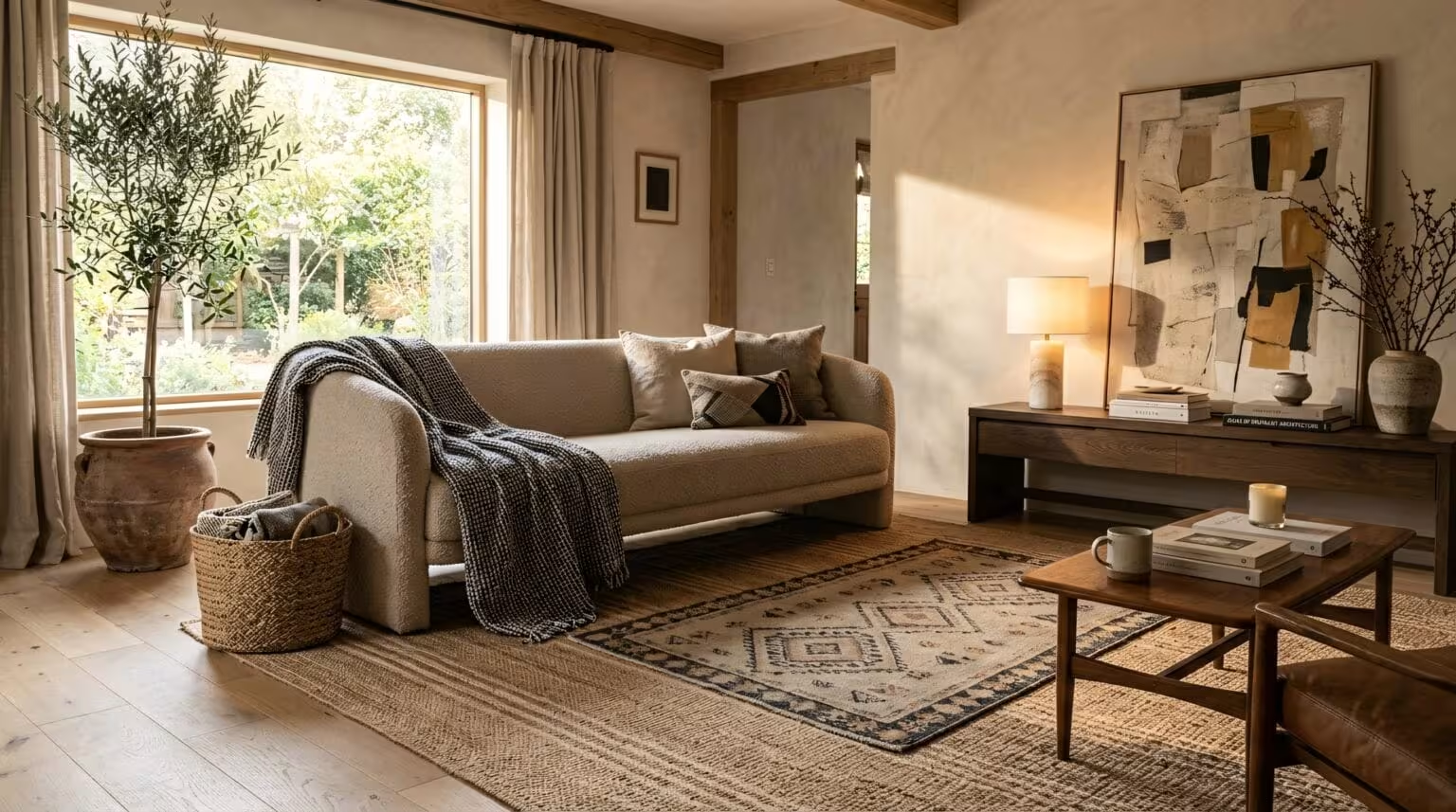
There’s a particular room that comes to mind when people talk about a home that feels finished. Light pools across a rug in the late afternoon. A throw sits draped with just enough imprecision to look unstaged. Objects on the shelf seem to have arrived over years, not been placed in a single Saturday afternoon.
That room didn’t happen by accident, and it didn’t happen through more shopping. It happened through layering — the slow, deliberate accumulation of texture, light, and object that separates a room that’s furnished from one that’s truly finished. This is the method behind it.
Apex Illume is reader-supported. When you purchase through links on our site, we may earn an affiliate commission at no extra cost to you.
How We Chose This Layering Method (and the Pieces Used as Examples)
Layering is not about more—it’s about sequence. The method here is designed to prevent the most common failure mode: buying finishing details before the foundation exists to hold them. The featured items in this guide are included as examples of “true layers”—pieces that contribute texture, light, or warmth in a way the room can feel, not just photograph.
What Is Layered Home Decor, and Why Does It Make a Room Feel Finished
Layering is often mistaken for maximalism. It isn’t. It’s depth — the sense that a room has more than one thing happening at eye level, at ankle level, at the ceiling.
Depth, Comfort, and the "Collected" Feeling
A layered room feels collected because it draws from more than one moment in time and more than one texture. A smooth linen sofa against a nubby wool rug. A hard-edged coffee table softened by a stack of worn books. This contrast is what creates the sense that a room has been lived in rather than assembled.
Why Layering Feels Intentional, Not Excessive
The difference between layered and cluttered comes down to restraint within abundance. Each layer should serve a purpose — warmth, light, texture, focal interest — rather than simply filling space. A room with five thoughtful layers will always feel calmer than one with three careless ones.
The Designer Order for Layering a Living Room
Layering has a sequence, and skipping steps is the most common reason a room never quite resolves.
Start With the Floor
Flooring sets the room’s undertone before anything else enters it — the warmth of a wood grain, the coolness of stone, the texture underfoot that every other layer will eventually sit on top of.
Place Anchor Furniture First
The largest pieces — sofa, sectional, primary seating — should be placed before any styling begins. A room’s furniture arrangement, including any supporting seating like a well-placed accent chair, should already feel resolved and comfortable before a single throw pillow enters the conversation; see Comfortable Accent Chairs for guidance on choosing pieces that complement rather than compete with a primary sofa.
Layer the Rug Beneath It
A rug placed beneath the anchor furniture — not simply in front of it — grounds the seating arrangement and defines the room’s primary zone. This is the layer most often placed last by instinct and first by design.
Build in Lighting Before Textiles
Lighting should be resolved before soft goods arrive, since fixtures often dictate where a side table or reading chair can realistically go. Get the light sources right first, and the textiles that follow will have somewhere purposeful to land.
Add Textiles for Warmth and Texture
Throws, pillows, and secondary rugs are where a room starts to feel touchable rather than just visually complete. It’s best introduced gradually, over weeks rather than in a single sitting.
Finish With Art and Objects
Art and small objects are the final layer because they respond to everything beneath them — the wall color already set by furniture placement, the palette already established by textiles. This is the layer that makes a room feel personal rather than staged.
Placement Guidance: Where Each Layer Actually Lives
Layering works when each layer has a job—and a place to land.
- Floor layer: rugs should sit under key furniture legs so the room reads as one zone, not scattered pieces.
- Furniture layer: anchor pieces go first, then supporting seating fills the conversation lines—never the other way around.
- Lighting layer: place a warm lamp where a person actually sits; mood lighting should follow behavior, not corners.
- Object layer: objects belong in clusters, not evenly spaced across every surface—editing is what makes the room feel collected.
Layered Lighting 101 — Balancing Ambient, Task, and Accent Light
A room’s lighting should work in layers just as much as its textiles do — no single source doing all the work.
Ambient Light as the Foundation
Ambient light — overhead fixtures, larger lamps — establishes the room’s baseline glow. It should be soft enough to live with in the evening without ever feeling like the only option in the room.
Task Light for Function and Focus
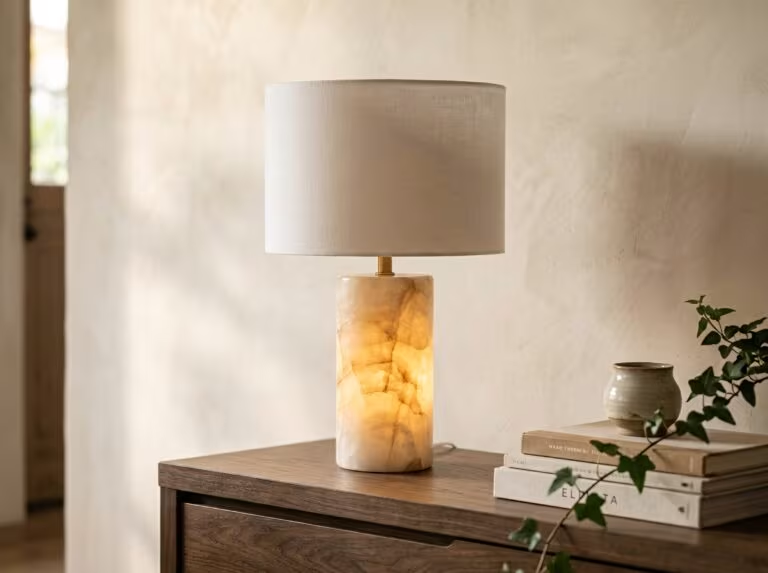
Task lighting exists to serve a specific activity: reading, working, cooking. A compact, well-placed table lamp does this beautifully in a living room setting. The Firma Table Lamp, with its cylindrical Spanish alabaster base and white linen shade, offers exactly this kind of quiet, functional glow — small enough for a side table, substantial enough in material to feel like more than an afterthought. At $265 through Lightology, it earns its place twice over — practical light paired with genuine material beauty.
Pros
- Alabaster brings a depth that reads quiet but expensive—material doing the work.
- A compact footprint that still feels substantial.
- Shade diffuses light softly, which is what most living rooms want at night.
Cons
- Alabaster varies naturally; uniformity isn’t the point.
- A small lamp won’t fix a lighting plan by itself—it’s a layer, not the whole system.
Who it’s for
- Side tables that need a warm, stable glow.
- Rooms that already have structure and now need softness.
- Anyone drawn to material integrity over decorative fuss.
Who shouldn’t buy
- If you need high-output task lighting for detailed work (choose a more directional task lamp).
- If you want a bold sculptural lamp that steals the scene—this one is deliberately composed.
Placement guidance
- Place so the shade bottom sits roughly at seated eye level or slightly below to reduce glare.
- Best when paired with another light source elsewhere—layering works when no single lamp is forced to do everything.
Firma Table Lamp
by Beacon Lighting
Compact table lamp with a cylindrical Spanish alabaster base and a white linen shade
Price at time of publishing· Subject to change
US only
Accent Light for Mood and Drama
Accent lighting — picture lights, uplighting, small decorative fixtures — exists purely for atmosphere. It’s the layer most rooms skip entirely, and the one that most reliably makes an evening room feel finished rather than merely lit. For a deeper dive into building out this full lighting hierarchy, see Six Pillars of Luxury Lighting
How to Layer Rugs Without Creating Trip Hazards
Rug layering is one of the most visually rewarding techniques in a designer’s toolkit — and one of the easiest to get structurally wrong.
Choosing a Jute or Natural-Fiber Base
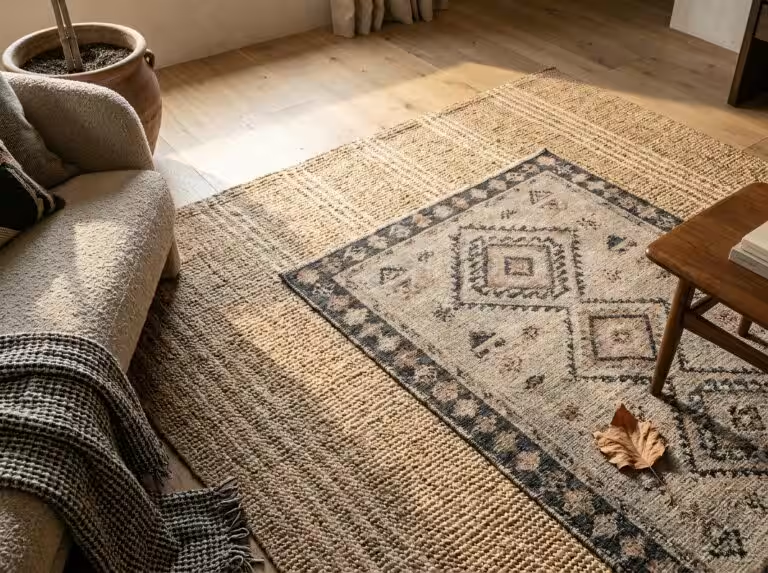
A natural-fiber base rug establishes texture and warmth across the widest footprint of the room. The Panama Jute / Sisal Area Rug in Beige is a strong example of this foundational layer — a handwoven jute and sisal blend in a simple cross-stripe weave, sized generously at 96 by 120 inches with a low half-inch pile. Priced at $656 through Perigold, it’s substantial enough to anchor a full seating area while staying low-profile enough to layer beneath a second rug.
Pros
- Establishes texture across a wide footprint—true foundation layer.
- Low profile makes layering safer and cleaner.
- Neutral tone supports almost any palette.
Cons
- Natural fibers prefer gentle maintenance; vacuuming is part of the deal.
- Not the softest underfoot on its own—best when topped with a softer layer if comfort is the priority.
Who it’s for
- Anyone building a living room from the ground up (literally).
- Rooms that need warmth and texture without adding pattern noise.
- People who want layering to look intentional, not improvised.
Who shouldn’t buy
- If you need plush softness as the only rug layer.
- If spills are frequent and you don’t want a natural-fiber maintenance routine.
Placement guidance
- Make it large enough that key furniture legs sit on it—this is what makes a room feel “zoned.”
- Keep edges clean and fully flat; the base layer sets the room’s calm.
Panama Jute / Sisal Area Rug in Beige
by Villa by Classic Home
Handwoven jute/sisal rug in beige with a simple cross‑stripe weave; size 96″ W x 120″ L with 0.5″ pile height.e
Price at time of publishing· Subject to change
US only
Topping With Wool or Pattern for Contrast
A smaller wool or patterned rug placed on top of the jute base adds visual interest and softness underfoot, particularly beneath a coffee table or in front of a favorite chair. The contrast in texture between the two materials is what keeps the effect looking intentional rather than accidental.
Sizing and Placement Rules That Keep Walkways Safe
The top rug should sit fully within the borders of the base rug, with no overlapping edges that could catch a foot mid-stride. A half-inch pile height, like that of the Panama Jute Rug, also helps minimize any noticeable step-up between layers.
The Coffee Table, Shelf, and Mantel Layering Formula
Flat surfaces are where layering either looks effortless or starts to look busy. The difference lies in ratio.
Height and Scale Ratios That Look Intentional
A dependable formula: one tall object, one medium object, one low or flat object, grouped in odd numbers. This simple height variation is what keeps a surface visually interesting without requiring a design degree to execute.
Mixing Textures Without Creating Clutter
Pairing a hard-surfaced object — ceramic, stone, glass — with something soft, like a small stack of linen-bound books, adds tactile variety. The goal is always variety within restraint: three or four objects, thoughtfully mixed, rather than every treasured item displayed at once.
Small-Space Layering That Adds Warmth Without Crowding
A small room can absorb just as much layering as a large one — it simply requires more editing along the way.
Editing Down Before Layering Up
Before adding new layers, remove anything currently doing double duty as visual noise. A small space layers well only once its existing clutter has been cleared.
Furniture Scale That Preserves Walkway Flow
Choose furniture with slimmer profiles and exposed legs in tighter rooms, preserving enough visible floor to keep the space feeling open even as layers accumulate on top of it.
Light Layering Tricks for Tiny Rooms
A single well-placed accent lamp, like the Firma Table Lamp, can add an entire layer of warmth to a small room without consuming any meaningful floor space — proof that layering in a compact room is about precision, not quantity.
Kid- and Pet-Friendly Layering That Actually Holds Up
A layered room shouldn’t mean a fragile one. Durability and warmth can coexist with the right material choices.
Performance Fabrics Worth Building Around
Performance textiles resist staining and wear without sacrificing the tactile softness layering depends on, making them a smart foundation for any household with kids or pets in regular rotation through the living room.
Washable Rugs for Real Daily Life
A washable or easily cleaned rug in high-traffic zones lets a layered look survive daily spills and muddy paws without constant anxiety — durability and design working in the same direction rather than against each other.
Layered Bedding, Step-by-Step
Bedding follows the same layering logic as a living room, scaled down to a single surface.
The Pillow-Count Formula That Looks Plush, Not Fussy
A dependable bedding formula: two sleeping pillows, two decorative shams, one lumbar or accent pillow. This keeps the arrangement looking plush without tipping into a pile that has to be removed nightly just to sleep.
Throws and Textures That Photograph Well and Sleep Cool
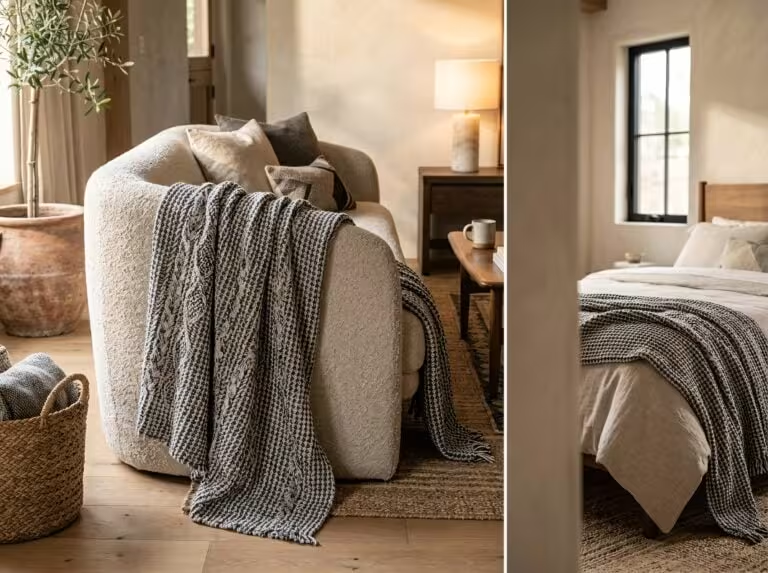
A throw draped at the foot of the bed adds the same finishing texture a living room throw provides — visual warmth without added bulk. The Thread Throw in Black-White, handwoven from a 70% wool and 30% cotton blend, brings exactly this kind of tactile, graphic layer to a bed or sofa alike. At 55 by 71 inches and priced at $140 through Finnish Design Shop, it’s generously sized enough to photograph beautifully while remaining light enough not to overheat a bed styled for actual sleep.
Pros
- Adds graphic texture without relying on color.
- Works across rooms: bed, sofa, reading chair.
- A finishing layer that looks intentional even when draped casually.
Cons
- High-contrast throws can dominate a very quiet palette if overused.
- Throws only work when they’re not one of ten—one good layer beats many mediocre ones.
Who it’s for
- Rooms that need one crisp note to sharpen soft neutrals.
- Anyone who wants a “finished” look without adding more furniture.
Who shouldn’t buy
- If your room already has strong pattern and contrast competing.
- If you want a purely tonal, barely-there textile layer.
Placement guidance
- Best draped at the sofa arm or foot of the bed—one relaxed fold is enough.
- Let it echo something else in the room (a frame color, a rug detail) so it feels inevitable, not introduced.
Thread Throw in Black-White
by Tom Dixon
Handwoven 70% wool / 30% cotton throw in a black‑and‑white weave; measures 55.12″ x 70.87″
Price at time of publishing· Subject to change
Price at time of publishing· Subject to change
Arm Height for Resting, Not Just Reaching
Arms should sit low enough to rest a forearm naturally, not so high that shoulders creep upward to reach them. A reading chair’s arms exist to hold a book, a cup of tea, or simply the weight of a relaxed hand — not to prop up posture.
FAQs
What does “layering” mean in home decor?
It means building depth with multiple elements at multiple heights—floor, furniture, lighting, textiles, and objects—so the room feels finished rather than simply filled.
What is the correct order to layer a room?
Start with anchors: floor → furniture → rug → lighting → textiles → art/objects. Skipping the lighting step is one of the most common reasons a room never feels resolved.
How many layers is too many?
It’s less about number and more about clarity. If every surface is equally active, the room loses hierarchy. A layered room still has negative space.
How do I layer decor in a small room without crowding it?
Edit first, then choose slimmer furniture and add warmth through lighting and textiles—small layers with high impact, not more objects.
How do I keep layered decor from looking cluttered?
Repeat a limited palette, keep surfaces to a few objects, and group items in odd numbers with height variation—then leave space around them.
What’s the easiest layer that makes a room feel finished fast?
Lighting. A warm lamp placed where you actually sit changes the room more than most accessories ever will.
How do I make a room feel collected instead of newly decorated?
Avoid buying everything at once. Build a base, then add a few pieces slowly—objects that look chosen, not acquired.
There’s a particular kind of room that only comes from layering slowly — a rug added one season, a lamp discovered the next, a throw that finally felt right after months of looking. None of it arrived at once, and none of it needs to.
A room built this way rarely feels decorated. It feels like it belongs to the people living in it. Explore the pieces we return to again and again, and let your own rooms take the time they need to feel finished.
About the author
Mabrouk Mhamdi is the curator behind Apex Illume, an independent editorial guide to refined minimalist interiors—focused on lighting, seating, and décor chosen for proportion, materiality, and long-view design. Recommendations are research-based and selected to reduce decision fatigue with a tighter, more considered edit.