
Focused Function: Architectural Desk Lamps Where Engineering Meets Art
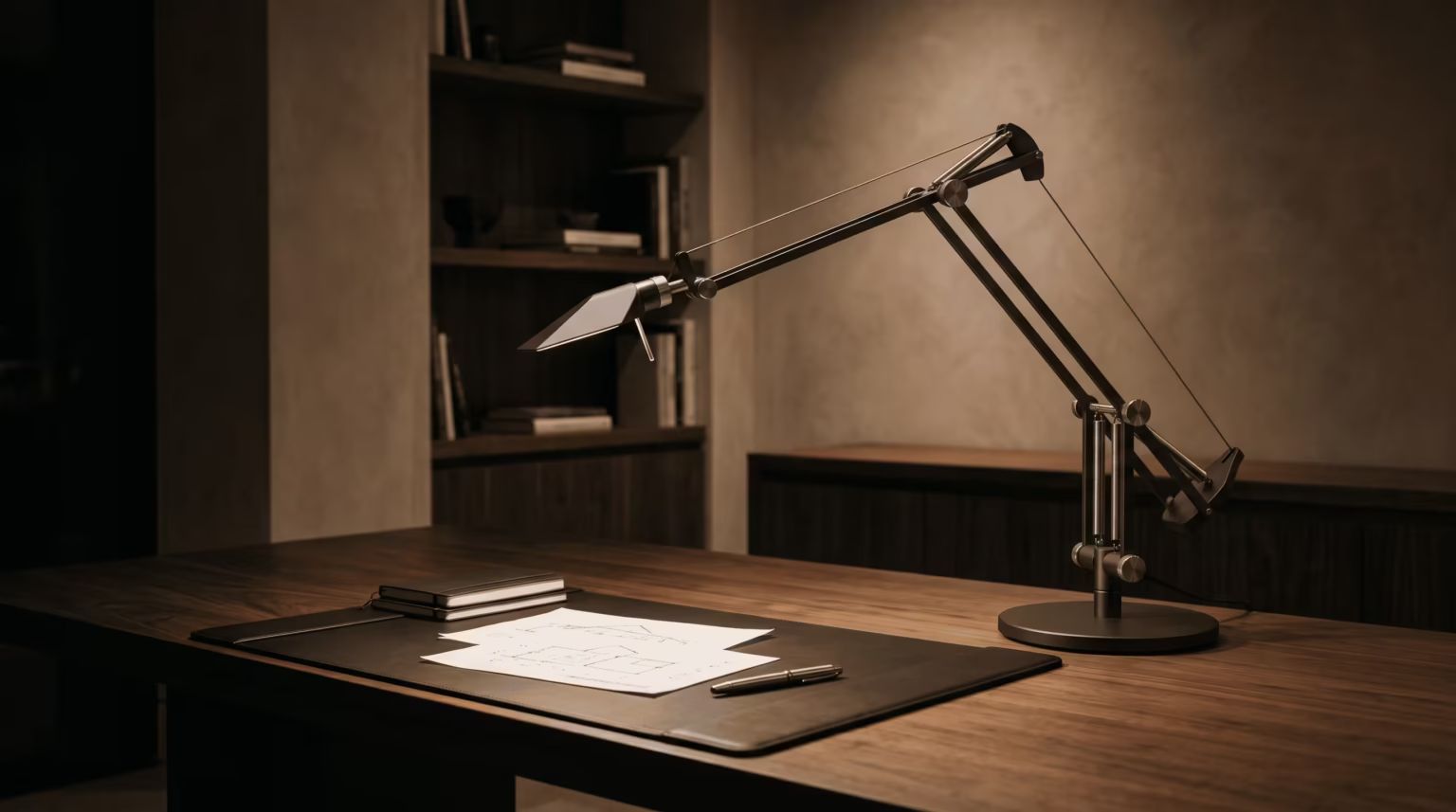
Precision and Poise: 8 Task Lights for the Modern Workspace
In a high-end home office or executive study, a desk lamp must be more than a mere bulb; it is a tool of precision and a statement of mechanical art. Fulfilling the targeted task requirements outlined in The Six Pillars of Minimalist Architectural Lighting, our curated selection prioritizes visible engineering, counterbalanced tension, and absolute adjustability to elevate task lighting into a refined sculptural statement.
“Apex Illume is reader-supported. When you purchase through links on our site, we may earn an affiliate commission at no extra cost to you.”
Architectural Desk Lamps: Quick Picks (By Work Style)
- Best classic architect icon: Tolomeo Micro Table Lamp
- Best minimalist LED precision line: Linear table lamp with table base
- Best counterweight engineering: Tizio Classic Table Lamp
- Best warm material presence: Accord Lighting Balance Desk Lamp
- Best heavy base stability: Woolsey 26 Inch Desk Lamp
- Best space-saving clamp: Type 75 Clip-on (Anglepoise)
- Best flexible modern controls: Splitty Reach Desk Lamp
- Best sculptural “art object” on a desk: Aspide Table Lamp
Comparison Table
| Pick | Type | Adjustability | Best for | Tradeoff |
|---|---|---|---|---|
| Tolomeo Micro Table Lamp | Spring-arm architect lamp | High (articulated arms + adjustable shade) | Drafting, detail work, classic “architect lamp” feel | Visible mechanics read more technical than decorative |
| Linear table lamp with table base | Linear LED task bar | Moderate–High (rotates to aim down or wall-wash) | Minimal desks; even LED coverage | Less character—very quiet by design |
| Tizio Classic Table Lamp | Counterweight cantilever | High (balanced repositioning) | Engineers/architects who constantly re-aim light | Can dominate small desks; needs breathing room |
| Balance Desk Lamp (Accord Lighting) | Refined apothecary silhouette | Moderate | Home offices where the lamp must read like furniture | Less reach than long-arm instruments |
| Woolsey 26" Desk Lamp | Marble-base anchored lamp | Low–Moderate | Stable presence; classic form with weight | Footprint and weight aren’t subtle |
| Type 75 Clip-on (Anglepoise) | Clamp lamp | High | Shallow desks; space-saving setups | Requires a clampable edge/surface |
| Splitty Reach Desk Lamp | Friction / joint mechanism lamp | High | Flexible positioning + modern controls | More contemporary/tech-forward look |
| Aspide Table Lamp | Sculptural rotating statement | High (wide rotation range) | Desks in open-plan rooms where it must read as art | Bold chrome presence; not visually “quiet” |
How We Chose (Rubric for Architectural Desk Lamps)
- Beam control (hotspots vs even coverage)
- Adjustability (reach, joints, balance stability)
- Glare discipline (monitor reflections, exposed sources)
- Base footprint (desk real estate) vs clamp options
- Material integrity (arm stiffness, joints, finish wear)
- Switch/dimming ergonomics (touch, inline, base control)
- Cable discipline (desk calm depends on it)
- “Reads as design” from across the room (open-plan relevance)
Don’t Buy an Architectural Desk Lamp If…
- You want ambient mood lighting (architect lamps are precision tools)
- Your monitor glare bothers you and you won’t angle the head carefully
- You have a tiny desk and won’t use clamps (footprints add up fast)
- You want the lamp to disappear (mechanics are part of the aesthetic)
- You don’t want to think about bulb base/voltage compatibility across regions
1. The Articulated Spring Arm
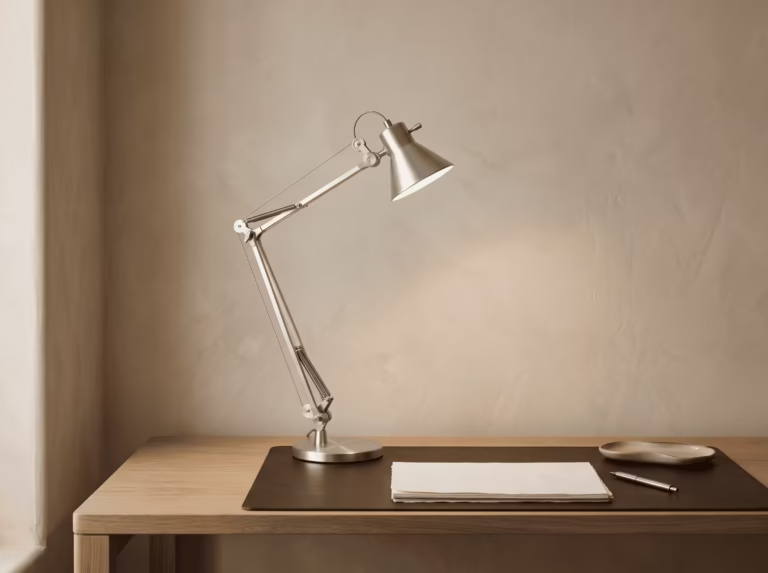
Product Name: Tolomeo Micro Table Lamp
Design Intent: A smart, sophisticated take on the classic architect lamp, elevating industrial design into a highly functional yet stylish accent for your workspace. The visible tension engineering makes adjusting the arms and shade both easy and secure, directing the standard bulb illumination precisely where needed for any project.
Materiality: The articulated structure is a well-built, robust combination of precisely machined aluminum and steel.
Who it’s for
- People who want a classic “true task lamp” with strong adjustability for drawing, reading, and model work.
- Anyone who changes posture/position a lot and needs the light to follow.
- Studios where function matters as much as silhouette.
Who shouldn’t buy
- If you want a lamp that visually disappears (this style reads “equipment,” intentionally).
- If you hate adjusting arms/joints and want a fixed, minimal bar.
- If your desk is extremely shallow and you can’t spare footprint or clamp space.
Tolomeo Micro Table Lamp
by Artemide
Aluminum – Steel
Price at time of publishing· Subject to change
Price at time of publishing· Subject to change
2. The Ultra-Thin Linear LED
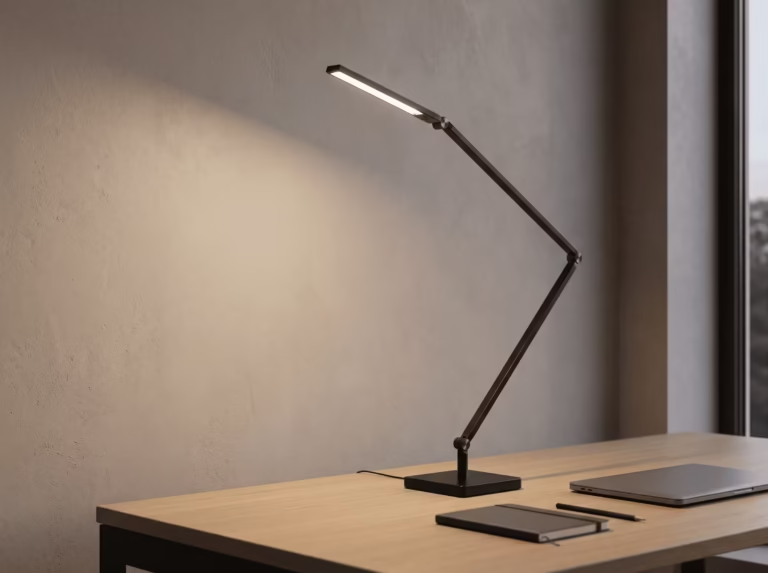
Product Name: Linear table lamp with table base
Design Intent: Designed by Bernhard Osann, this fixture charms with a design so streamlined that a luminaire could hardly get more minimalist than this. The hidden LED light source rotates on its axis, allowing the light to be directed either straight down toward the table for focused work or cast onto the wall to create atmospheric, indirect lighting.
Materiality: The dynamically shaped, slender, and angular frame is constructed from high-quality aluminum and technopolymer.
Who it’s for
- Screen-heavy setups (dual monitors) where you want controlled, even task light without visual clutter.
- People who prefer a modern, “architectural line” aesthetic.
- Desks where you want predictable coverage rather than a spotlight effect.
Who shouldn’t buy
- If you do lots of paper drafting and want a more directional beam you can aim precisely.
- If you want a warm, decorative lamp that adds coziness—linear task lights can feel more technical.
- If you’re sensitive to any glare on screens and can’t position it carefully.
Linear table lamp with table base
by Nemo Lighting
Aluminum – Technopolymer
Price at time of publishing· Subject to change
Price at time of publishing· Subject to change
3. The Counterweight Cantilever
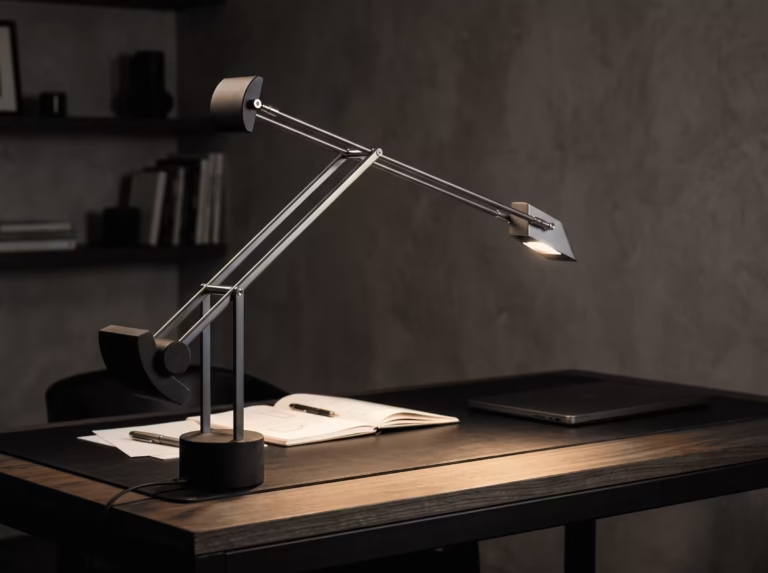
Product Name: Tizio Classic Table Lamp
Design Intent: A classic lighting design created specifically for direct task lighting. This piece offers a striking, adjustable silhouette with a 360-degree rotatable base and an adjustable head to ensure proper and direct LED light distribution. It operates as a visual balancing act, utilizing heavy counterweights rather than springs.
Materiality: The highly complex structure features electrical conductor arms in anti-corrosion treated aluminum, arm spacer bars in chromed steel, and counterweights in die-cast zinc alloy. The head is die-cast aluminum with a high-efficiency reflector, anchored by a polyphenylene ether and polystyrene base.
Who it’s for
- Design-forward buyers who want an iconic form that still functions as a serious task light.
- Desks where you want reach and adjustability but a very composed silhouette.
- People who like the “object” quality of lighting—beautiful on and off.
Who shouldn’t buy
- If you only care about max output per dollar (icons often carry a design premium).
- If you want something visually soft and domestic rather than crisp and engineered.
- If you tend to leave lamps in one position forever (you may not use what you’re paying for).
Tizio Classic Table Lamp
by Artemide
Aluminum – Chromed Steel – Zinc – Polyphenylene Ether – Polystyrene
Price at time of publishing· Subject to change
Price at time of publishing· Subject to change
4. The Refined Apothecary
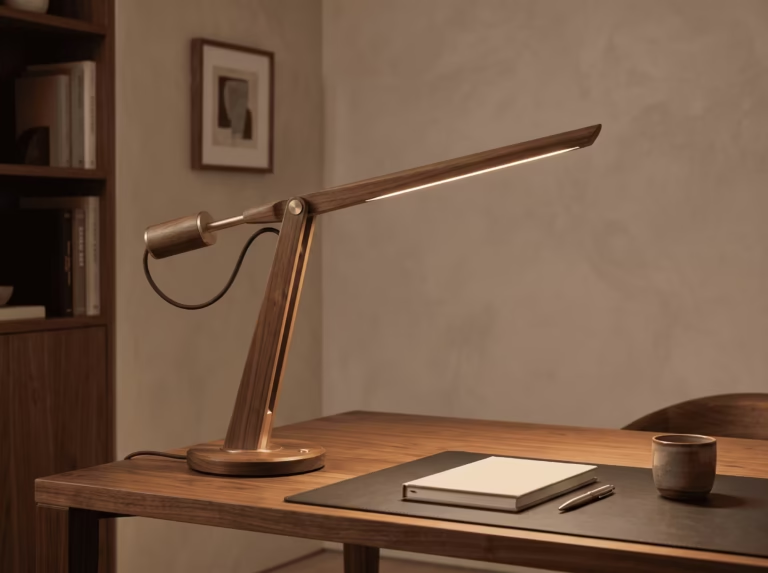
Product Name: Bruno Diego Felippe Balance Desk Lamp by Accord Lighting
Design Intent: A contemporary, timeless design that functions as a beautiful decorative luminaire. Proudly made in Brazil, this piece combines high-end LED technology with irreplaceable manual finishing to create a warm, structural focal point that modernizes the traditional balanced desk lamp.
Materiality: Departing from heavy metal, this fixture is meticulously crafted in a natural wood veneer or an Italian lacquer finish, elevating the task light into a piece of fine cabinetry.
Who it’s for
- People who want adjustability with a calmer, more refined presence than a classic spring-arm lamp.
- Home offices where the lamp needs to look intentional on video calls.
- Anyone who wants task light without “workshop vibes.”
Who shouldn’t buy
- If you need extreme reach across a large drafting surface.
- If you prefer ultra-industrial hardware aesthetics.
- If your desk layout changes constantly and you need the most flexible arm geometry.
Bruno Diego Felippe Balance Desk Lamp
by Accord Lighting
Natural Wood Veneer
Price at time of publishing· Subject to change
US only
5. The Stone Base Anchor
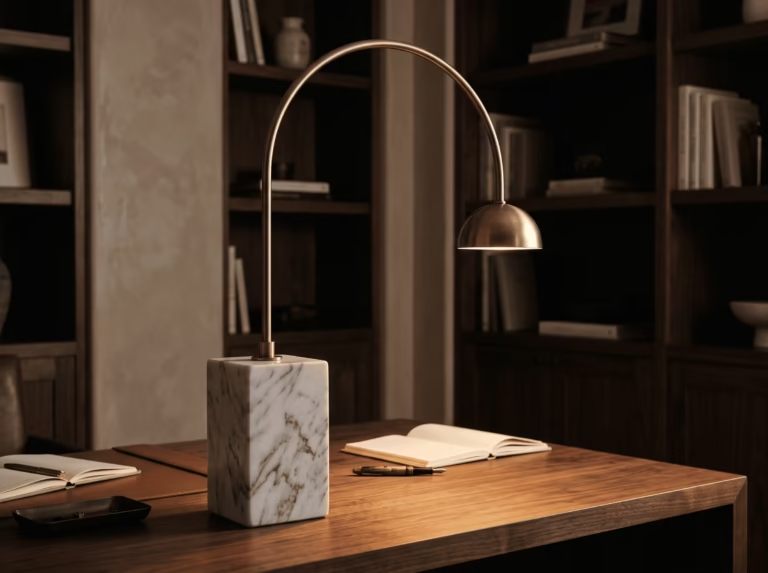
Product Name: Woolsey 26 Inch Desk Lamp by Harp and Finial
Design Intent: Designed to ensure you have plenty of light as you work, this fixture boasts a classic aesthetic that plays on visual tension. Reaching a commanding height of 26.5 inches, it juxtaposes a heavy, grounded anchor with a delicate, reaching arm that delivers warm incandescent illumination.
Materiality: The lamp features a sleek antique brass body that contrasts sharply against a solid, heavy marble base.
Who it’s for
- Precision-minded users (architects/engineers/makers) who want a tool-like lamp that feels dependable.
- Spaces where durability and stable positioning matter (frequent repositioning, long work sessions).
- People who want lighting that supports accuracy and focus.
Who shouldn’t buy
- If your priority is decorative ambiance more than task clarity.
- If you want the light to feel “invisible” rather than intentionally functional.
- If you need a super-compact lamp for a tiny desktop.
Woolsey 26 Inch Desk Lamp
by Harp and Finial
Antique Brass – Marble
Price at time of publishing· Subject to change
US only
6. The High-End Clamp Lamp
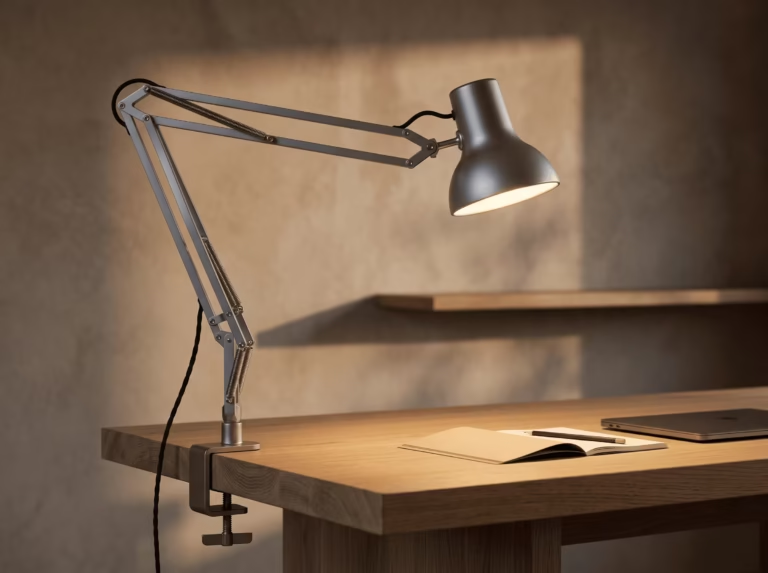
Product Name: Type 75 26 Inch Clip-on Lamp by Anglepoise
Design Intent: Combining elegant, classic looks with flowing movement and full adjustability. Designed to clamp securely to any horizontal surface between 6-50mm thick, it completely abandons the traditional base to free up valuable desk space while extending the functional LED lighting possibilities of the workspace.
Materiality: The entire fixture, including the engineered joints and the iconic shade, is meticulously crafted from premium aluminum.
Who it’s for
- Anyone who wants a recognizable, heritage task-lamp silhouette that suits home offices.
- People who like a balance: practical adjustability + friendly design presence.
- Renters/room refreshers who want a quick style upgrade that still works hard.
Who shouldn’t buy
- If you need a very long reach for oversized desks or drafting boards.
- If you want the sleekest, most minimal look possible.
- If you dislike visible mechanical joints as part of the aesthetic.
Type 75 26 Inch Clip-on Lamp
by Anglepoise
Premium Aluminum
Price at time of publishing· Subject to change
Price at time of publishing· Subject to change
7. The Magnetic / Friction Joint
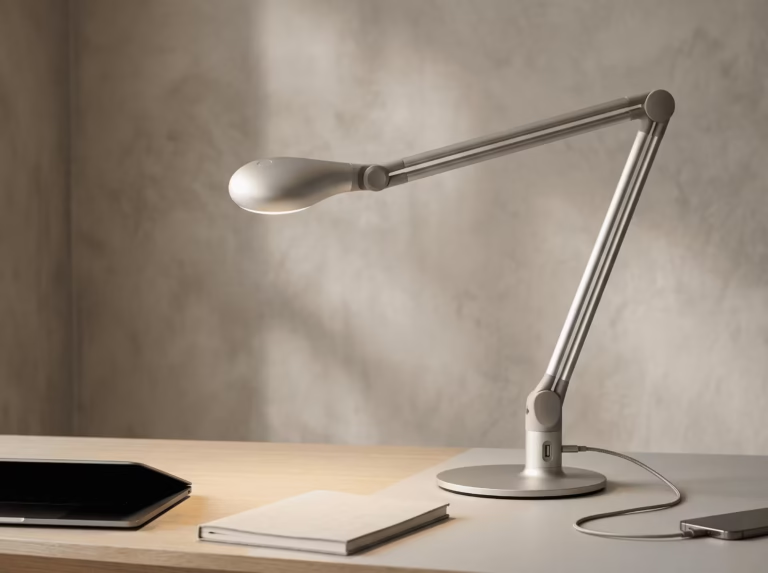
Product Name: Splitty Reach Desk Lamp
Design Intent: Inspired by the fluidity and formlessness of water droplets, this lamp offers incredible flexibility and reach. It utilizes a special joint mechanism to ensure a fluid range of motion, allowing users to effortlessly dim or toggle the LED power simply by touching the head.
Materiality: Crafted from fully recyclable aluminum and durable plastic components. The sleek silhouette also integrates a highly convenient USB port in the lower body to keep electronics within reach.
Who it’s for
- Small desks and tight layouts where you need function without eating surface area.
- People who want a more compact, modern task solution.
- Anyone building a layered setup (monitor light + desk lamp + ambient) and needs the desk lamp to stay out of the way.
Who shouldn’t buy
- If you want one lamp to cover a very large work surface.
- If you prefer a heavier, more substantial presence (compact lamps can feel visually “lightweight”).
- If you need lots of vertical height to clear tall monitor stacks or shelves.
Splitty Reach Desk Lamp
by Koncept
Aluminum – Plastic
Price at time of publishing· Subject to change
US only
8. The Geometric Sculptural Block
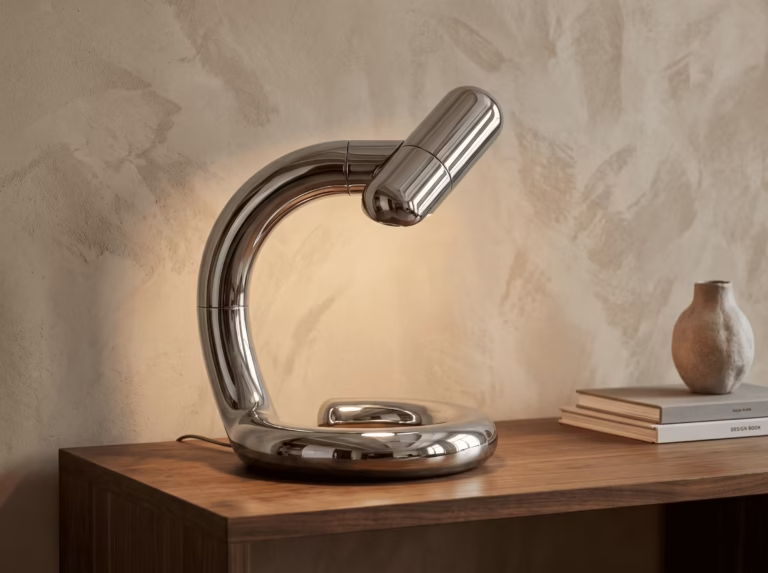
Product Name: Aspide Table Lamp
Design Intent: Designed by Gianfranco Frattini in 1970, this is a striking lighting design piece characterized by its serpentine grace. Offering an impressive rotation range from 0º to 350º, it provides unparalleled flexibility for both LED task lighting and ambient illumination, serving as a timeless and captivating design statement whether turned on or off.
Materiality: The fixture is formed entirely from brilliant metal chrome curves, ensuring structural rigidity and a sleek, mirrored finish.
Who it’s for
- Design lovers who want the lamp to be a sculptural object on the desk.
- Creative studios where mood and identity matter as much as strict performance.
- People who want a piece that reads curated even when switched off.
Who shouldn’t buy
- If you want the most neutral, purely utilitarian task light.
- If you need the easiest, most “set-and-forget” ergonomics.
- If you’re sensitive to anything that trades some practicality for form.
Aspide Table Lamp
by Gubi
Metal Chrome
Price at time of publishing· Subject to change
Price at time of publishing· Subject to change
Placement & Glare (A Quick Guide)
Architectural desk lamps perform best when you treat them like precision tools: close enough to control, angled enough to disappear from your sightline. Start by placing the lamp on the opposite side of your dominant hand so your wrist and forearm don’t cast a working shadow. Next, set the head so the beam lands on the keyboard and paper zone—not the monitor. If you see a hotspot reflected on your screen, lower the lamp head slightly and tilt it downward, keeping the light directed to the desktop rather than forward into your eyes.
For smaller desks, a clip-on or cantilevered silhouette can reclaim surface space while still delivering reach; for heavier executive desks, a lamp with visual weight (stone, wood, or counterbalanced metal) looks intentional rather than temporary. Finally, protect the mood of the room: in open-plan spaces, choose a lamp that reads as sculpture from a distance—clean geometry, refined finishes, and a calm profile—so task lighting doesn’t feel like office equipment.
Placement Guide: Integrating Architectural Desk Lamps
An architectural desk lamp is a highly functional tool, but its placement dramatically affects the ergonomics of your workspace and the visual balance of the room. If your “workspace” is really a chair-and-side-table setup, start by choosing a reading chair that can hold an hour (or three) before you fine-tune beam angle and glare. While articulated desk lamps provide strict task lighting for the executive workspace, illuminating larger surfaces like kitchen islands or long dining tables requires the sleek, continuous span of linear suspension fixtures.
1. Ergonomics & Shadow Elimination
The Hand Rule: To prevent your hand from casting a shadow over your work, place the lamp on the side opposite your dominant hand. (If you are right-handed, the lamp should sit on the left side of your desk).
Monitor Glare: For fixtures with wide light spreads, ensure the lamp head is positioned slightly below eye level and angled downward to illuminate the keyboard or paperwork without reflecting glare onto your computer screen.
2. Maximizing Desk Real Estate
Clamp & Cantilever Solutions: If you are working on a shallow desk or require space for multiple monitors, utilize fixtures like the Type 75 Clip-on Lamp or the Tizio Classic. Clamps remove the footprint entirely, while cantilevers allow the heavy base to sit far back in the corner of the desk while the light head hovers right where you need it.
3. Visual Weight and Room Context
Anchoring the Desk: A large, solid desk requires a lamp with significant visual presence. A lamp with a Marble Base or a thick Wood Veneer structure holds its own against heavy furniture.
Open Concept Workspaces: If your desk is in an open-plan living room, avoid overly industrial, utilitarian clamps. Instead, opt for highly sculptural pieces like the Aspide Table Lamp or the Untitled Linear Lamp, which read as abstract art rather than office equipment when viewed from the sofa—especially if they’ll live near built-ins; see shelf styling ideas for keeping the surrounding composition calm.
To understand how this piece fits into a broader minimalist design strategy, explore our complete guide to curated interior lighting.
Architectural Desk Lamp FAQs
1) What makes a desk lamp good for architects/engineers?
Three things: positioning, glare control, and color quality. You want a lamp that can place light exactly where you’re working, won’t bounce into your eyes/monitor, and renders linework/material samples accurately.
2) How bright should a task lamp be?
For most desks: aim for roughly 500–1000 lumens from the lamp (dimmable is ideal).
If you already have good ambient room light, you can go lower; if the room is dim, you’ll want more output or a wider distribution.
3) Best color temperature + CRI for drafting and screen work?
- Color temperature: 3000K–4000K (3000K warmer/softer, 4000K crisper)
- CRI: 90+ is a great target if you review finishes, prints, or materials
4) Clamp vs base—what should I choose?
- Clamp: saves desk space and often allows better positioning; check desk thickness and edge clearance.
- Base: simplest for renters and quick rearranges; takes footprint and can conflict with notebooks/mouse space.
5) Integrated LED vs bulb-based—what’s better?
- Integrated LED: often slimmer, more efficient, sometimes better controlled optics; long life but “the lamp is the fixture.”
- Bulb-based: easy to replace/upgrade; more freedom with color temperature/brightness.
Pick based on whether you value serviceability (bulb) or sleek performance packaging (integrated).
6) How do I avoid glare on my monitor?
- Place the lamp so the beam hits the desk/work, not the screen.
- Keep the light source out of your direct line of sight.
- Use dimming and aim from the side (often opposite your dominant hand).
7) Where should I place it if I’m right-handed/left-handed?
- Right-handed: lamp generally works best on the left side to reduce hand shadow.
- Left-handed: lamp generally works best on the right side.
8) Is an “architect lamp” good for a home office too?
Yes—especially if you do focused reading/writing. If you mostly do screen work, prioritize glare control and a lamp that can sit slightly forward/side without shining into the display.